
Cotton Stalk Pellet Machine
Cotton stalk pellet machines are a highly efficient solution for turning waste into treasure. Using a high-temperature extrusion process, the equipment can efficiently process agricultural waste such as cotton stalks and wheat straw into pellets. These pellets are aesthetically pleasing, compact, and easy to store and transport. Commonly used in animal feed, biomass combustion, and cat litter.


What is a cotton stalk pellet machine?
Cotton stalk fibers are long and highly resilient, making them difficult to compress with conventional pellet mills. However, cotton stalk pellet mills possess strong extrusion capabilities, enabling them to quickly shape this material in a short time. This makes them ideal for continuous production.
High-quality cotton stalk pellet machine for sale
In the past, people simply discarded or burned the cotton stalks after harvesting. However, the value of cotton stalks has been underestimated. They are rich in cellulose and lignin, making them ideal for pelleting. Furthermore, cotton stalks can serve as a source of coarse fiber for ruminants, offering a more affordable alternative.
Cotton stalk pellet machines are key equipment for realizing the resource utilization of cotton stalks. After drying and crushing the cotton stalks, the pellet mill compresses this loose material into compact, uniform commercial pellets.
This equipment can not only compress cotton stalks, but as a straw pellet mill, it can also be used to compress wheat straw, corn straw, rice straw, bean straw, and other raw materials. Currently, we have helped clients in India, the United States, Brazil, Turkey, and other countries launch cotton stalk pelleting projects, with outputs ranging from 0.6 to 40 tons per hour.
1-45T/H capacity
2- 12 mm pellet
$10,000-$100,000


If your area also has a large volume of cotton stalks that need processing, RICHI can design a complete solution for you, from raw material handling to pellet packaging, based on your specific needs. Ensuring every cotton stalk achieves its maximum value.
Check out cotton stalk pellet machine real project videos
Hearing someone say it a hundred times is no substitute for seeing it for yourself. Here are videos of cotton stalk pelleting projects that RICHI has undertaken. Watching the videos of the cotton stalk pelleting machine in operation, production configuration, and pellet quality may provide valuable insights for your pelleting project. More videos can be found on YouTube. Or, you can directly communicate with our experts.

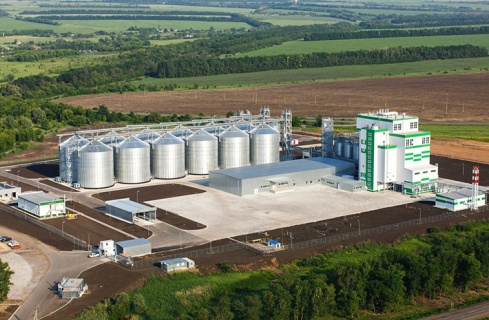
5 T/H Cotton Stalk Pellet machine in Kazakhstan
The line processes cotton stalk into high-quality pellets with two finished biomass fuel pellet sizes: 6 mm and 12 mm.
3 T/H Cotton Stalk Feed Pellet Machine in Turkey
Our feed pellet machine meets the demands of almost every conceivable application in the animal feed processing industry with application.
Different Applications of Cotton Stalk Pellet Machines
To meet the diverse needs of our customers, we have designed and manufactured two types of cotton stalk pellet machines, one for feed production and the other for combustion pellet production.

Cotton stalk feed pellet machine
High-temperature conditioning not only improves feed palatability and digestibility, but also eliminates pathogens in the feed, making animals less prone to illness after consuming it.


Cotton stalk biomass pellet machine
In our 3T/H Indian straw pelleting project, mainly produced 6- 8 mm pellets. Customer feedback indicated that the pellets had a long burning time and strong heat output.

Features and advantages of cotton stalk pellet machines
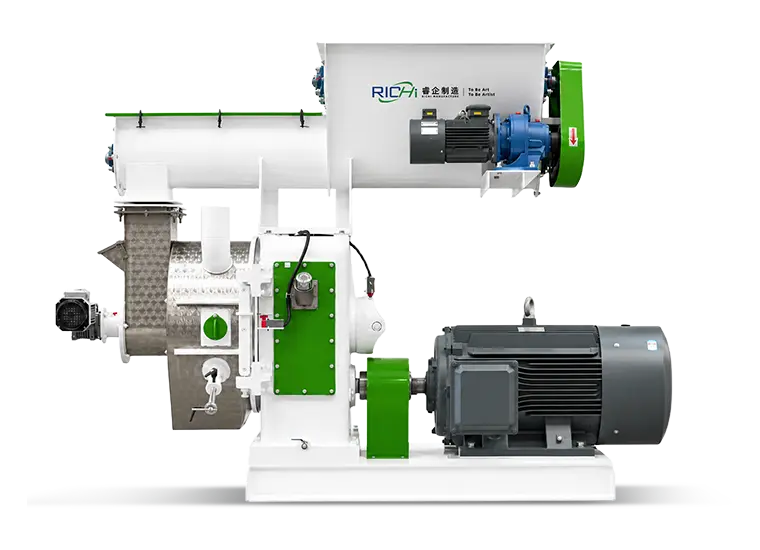
Once you’ve determined what type of equipment should be used for your granules, the next step is to gain a deeper understanding of the equipment’s features and structure, assessing its durability and its ability to support efficient, continuous production. This is especially important for customers seeking stable, long-term production.
We believe RICHI cotton stalk pellet machines will not disappoint you. Currently, all our equipment has obtained international certifications such as CE and ISO9001, and has undergone rigorous quality inspection, providing customers with stable and reliable production equipment.

Feeding system
It is installed on biomass pellet machines. Its main purpose is to reduce material entanglement and machine blockage, ensuring normal pelleting.
Anti-arching feeder
The double-helix structure rapidly disperses materials and forces them into the pelleting hopper. Suitable for high-fiber, lightweight materials.

pelletizing system
The pelleting chamber mainly consists of a ring die, pressure rollers, and a cutter. It adopts a modular structure for easy maintenance, reducing downtime.
Wear-resistant alloy steel
During pelleting, the cotton stalks directly cause wear to the ring die, pressure rollers, and cutter. Therefore, they are made of industrial-grade alloy steel, which is highly wear-resistant and effectively extends the equipment’s service life.

drive system
With the coordination of Siemens motors, couplings, and gearboxes, power and are continuously supplied to the machine. The transmission efficiency is high.
gearbox
High-precision gear transmission can improve transmission efficiency by about 15% compared with traditional belt transmission, resulting in high efficiency and energy savings.

Protection system
The entire machine adopts a one-piece frame, thickened shell, and safety monitoring devices. Under high-intensity operation, it exhibits low noise and low vibration.
Safety pin
This is an overload protection device. When the machine contains impurities or the main unit is overloaded, the safety pin will break, causing the switch to close and protecting critical components of the equipment from damage.
cotton stalk pellet machine parameters and price
Our cotton stalk pellet machine capacity ranges from 1 to 40 T/H. This is sufficient to support small-scale pellet production and commercial cotton stalk pellet plants. Furthermore, we understand that every customer’s needs are unique. Therefore, we support customized production capacities. Cotton stalk pellet machine prices range from $1,000 to $10,000. Specific quotes will vary depending on equipment configuration, production processes, and raw material characteristics. However, the consistent quality of our equipment remains constant.
Cotton stalk pellet machine for biomass pellets
When producing cotton stalk pellets, the pressure rollers rotate continuously, constantly squeezing the material into the die. Once the elongated material is extruded from the die holes, a cutter quickly slices it, forming uniformly burned pellets. Below are the specific parameters of the equipment.
| Model | MZLH320 | MZLH350 | MZLH420 | MZLH520 | MZLH678 | MZLH768 | MZLH858 |
| Main motor Power ( kW ) | 22 | 37 | 90 | 132 | 200 | 250 | 280 |
| Anti-arching Feeder Power(kw) | 2.2 | 2.2 | 3 | 3 | 3 | 4 | 4 |
| Forced Feeder Power(kw) | 0.75 | 0.75 | 1.5 | 1.5 | 1.5 | 1.5 | 1.5 |
| Ring Die Inner Diameter(mm) | 320 | 350 | 420 | 520 | 673 | 762 | 858 |
| Finished Particle Diameter(mm) | 4~12 | ||||||
| Output (T/H) | 0.2-0.3 | 0.3-0.5 | 1.0-1.2 | 1.5-2.0 | 2.5-3.0 | 3.0-4.0 | 4~5 |
Cotton stalk pelletizer for feed pellets
Before the feed pellets enter the pelleting chamber, the paddles inside the conditioner continuously toss and shovel the material, ensuring that it mixes evenly with high-temperature steam. During this process, the steam cooks and softens the material, making it easier to form pellets and release them from the die. Specific parameters for this equipment model are provided here.
| Model | SZLH250 | SZLH320 | SZLH350 | SZLH420 | SZLH508 | SZLH558 | SZLH678 | SZLH768 | SLZH858 |
| Main Motor Power (kW) | 22 | 37 | 55 | 110 | 160 | 185 | 250 | 315 | 355 |
| Feeder Power (kW) | 1.1 | 1.5 | 1.5 | 1.5 | 1.5 | 1.5 | 1.5 | 2.2 | 2.2 |
| Modulator Power (kW) | 1.5 | 4 | 4 | 7.5 | 7.5 | 11 | 11 | 11 | 15 |
| Die Inner Diameter (mm) | 250 | 320 | 350 | 420 | 508 | 558 | 673 | 762 | 858 |
| Finished Pellet Diameter (mm) | 2~12 | ||||||||
| Output (T/H) | 1.0-1.5 | 3-4 | 5-6 | 10-12 | 15-16 | 20-22 | 30-33 | 38-40 | 40-45 |
(In actual operation, variations in raw material conditions can lead to fluctuations in output. Before formally developing a solution, we can test your raw materials and use detailed data to create a more targeted design, thereby ensuring that the expected output is achieved.)
Why are cotton stalks suitable for pelleting?
Why are more and more people using cotton stalks to make pellet products? It’s not just because cotton stalks are inherently suitable for pelleting, but also because people see huge profit potential in the cotton stalk pellet market. The cheap and abundant supply of raw materials and diverse applications have turned this waste into a profitable product.

Good molding foundation
Cotton stalks contain abundant cellulose and lignin, which soften continuously under high-temperature extrusion, acting as a binder. This improves pellet density and structural strength while reducing breakage and powder formation during transportation and storage

Abundant raw material sources
Global cotton planting area will reach over 30 million hectares. Customers in countries like China, India, the United States, and Pakistan, in particular, have a natural advantage in raw materials. Cotton stalks have lower costs, and engaging in pelleting operations often yields higher profits.

Diverse application scenarios
They not only produce combustion pellets but also produce ruminant feed, animal bedding pellets, and even mix with animal manure to create organic fertilizer pellets. This diversified application allows manufacturers to choose the appropriate direction based on local resources and market conditions.

Conditions for Making Cotton Stalk Pellets
To produce high-quality pellets, the cotton stalks require pretreatment, such as drying and crushing. Generally, when the moisture content of the cotton stalks is between 10-15%, and they are granulated into a 3-5mm powder form, the pellet formation rate can reach 98%, and the yield increases by 15%-25%.
Global Project for Cotton Stalk Pellet Machines
RICHI cotton stalk pellet machines are currently used in over 50 countries, including the United States, India, and Uzbekistan. We have served individual business owners, pellet processing plants, and chain enterprises. RICHI provides customers with not just individual equipment, but complete production systems. From factory site selection, equipment selection, process design, installation and commissioning, to after-sales support, we provide full assistance to ensure your long-term stable production activities.

1.5–2 T/H cotton stalk pellet press in Uzbekistan
The customer wanted to use cotton stalks from a nearby cotton farm to produce biomass pellets for the local industrial boiler and heating market. The pellet size was 6-10mm. Initially, the customer purchased a single machine for trial production. As orders increased, they contacted us again, wanting to build a complete biomass production line to achieve continuous production.
- Project Type: Biomass Pellet Project.
- Client Type: Agricultural Biomass Energy Enterprise
- Pellet size: 6-8mm
- Main Raw Material: Primarily cotton stalks, with added sawdust to improve combustion performance.
- Main Equipment: MZLH520 cotton stalk pelletizer, drum chipper, hammer mill (coarse crushing + fine crushing), drum dryer, cooler, packaging scale.
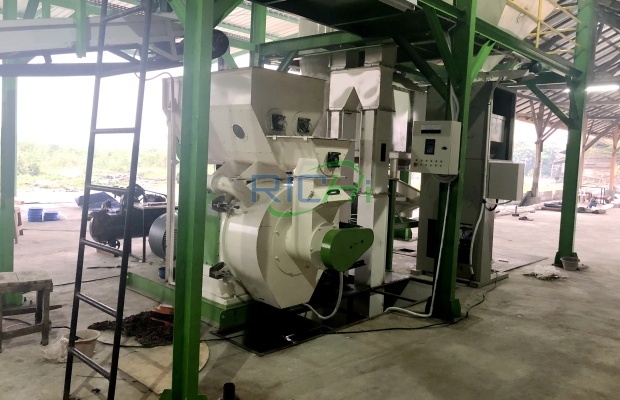
3-4T/H cotton stalk pellet mill in Pakistan
The client owns a 1,000-hectare cotton plantation and plans to use cotton leaves and stalks, corn, and soybean meal to produce cattle and sheep feed, while converting harvested cotton stalks into biomass pellets. The two production lines will operate in parallel, with schedules adjusted flexibly according to market demand.
- Project Type: Biomass and Feed Pelletizing Project
Client Type: Farm Enterprise
Main Raw Materials: Cotton stalks, cotton leaves, corn, soybean meal, alfalfa, premix
Pellet Size: 6-8mm cattle and sheep feed pellets, 8-10mm combustible pellets - Main Production Process:
Clean → Crushing → Mixing → Feed Pelletizing → Cooling → Screening → Packaging
Clean → Crushing → Drying → Biomass Pelletizing → Cooling → Screening → Packaging - Main Pelletizing Equipment: Cattle feed pellet machine, cotton stalk pellet machine
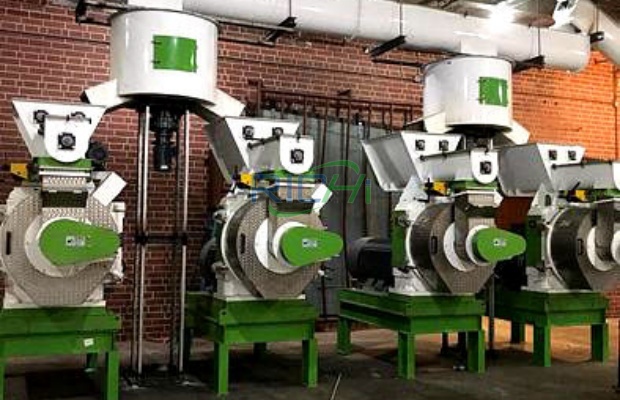
10T/H cotton stalk pelletizing machine in the United States
A fully automated production line has been established in the United States. Maintaining production continuity was a primary consideration when designing the production line. Ultimately, we chose a PLC intelligent control system to centrally manage the entire wood chip production line. Four straw pellet machines operate in parallel to reduce the risk of downtime.
- Project Type: Biomass Pelletizing Project
- Main Raw Materials: Cotton stalks, corn stalks, wood chips, sawdust
- Pellet Size: 6-8mm
- Main Equipment: 4 cotton stalk pelletizers, 2 dryers, crusher, cooler, vibrating screen, automatic baling scale, PLC intelligent system
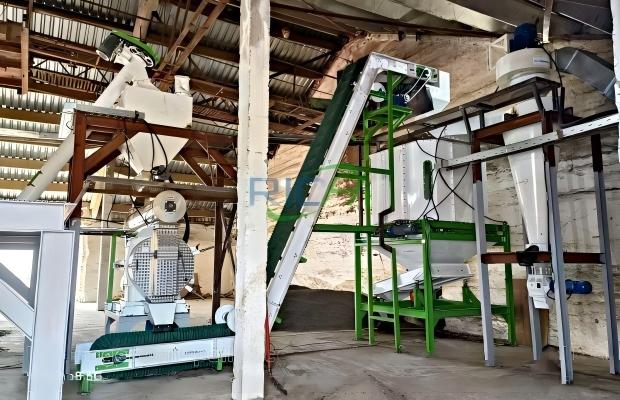
5T/H cotton stalk pellet machine in Kazakhstan
The client’s original production line equipment gradually became unable to keep up with the production capacity requirements. RICHI Engineering, based on the client’s existing equipment and target capacity, retained the original conveying equipment and only optimized and upgraded key equipment, thereby improving the overall production line efficiency.
- Project Type: Biomass Production Line Expansion
- Main Raw Materials: Cotton stalks, sunflower seed meal
- Pellets: 6-8mm combustion pellets for industrial boilers
- Main Equipment: Sunflower shell pellet machine (anti-arching + forced feeder for smooth feeding), crusher, dryer (13-15%), cooler, packaging system
How to make cotton stalk pellets?
We now understand that cotton stalk pelleting is a viable and profitable business. So how does pelleting work? It’s not just about using a single cotton stalk pellet machine. More importantly, it involves the coordinated operation of multiple upstream and downstream processes. The entire process varies depending on the type of pellet being processed. This section only breaks down the cotton stalk pelleting process. If you want to learn how to produce feed pellets, you can click to view the article on animal feed production lines.
Cleaning raw materials

The first step is to clean the collected raw materials. Specialized cleaning equipment will remove dust and stones from the materials, preventing machine jams.
01
Raw material crushing

Next, we generally use a chipper and pulverizer to process the raw materials into powder, making it easier to feed them into the cotton stalk pellet machine. If your raw materials are already in powder form, you can skip this step.
02
Drying raw materials

Excessively moist raw materials can clog equipment during granulation and make them difficult to press. Therefore, if the cotton stalk raw material has too high a moisture content, it usually needs to be added to a dryer to remove the moisture.
03
Making cotton stalk pellets
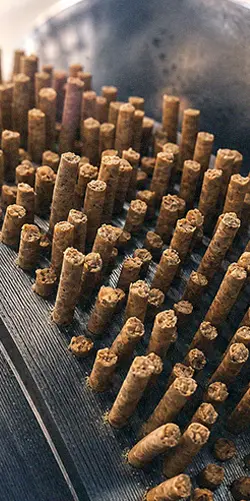
This is the most crucial step. Here, the cotton stalks are softened, compressed, and cut, ultimately forming dense granules. If you want different granule sizes, you can change to a corresponding ring die. Each machine is equipped with a ring die lifter, allowing for quick changes with just one button.
04
Cooling pellets
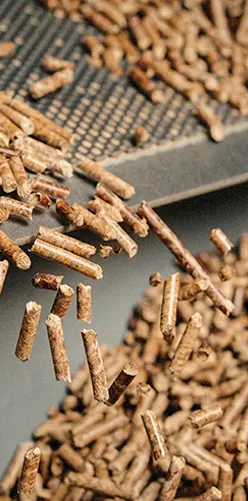
At this stage, the granules are hot and soft, making them prone to mold growth during long-term storage. Therefore, we usually install a cooling section after the pellet mill to quickly cool and solidify the granules, thus extending their storage time.
05
Screening and packaging section
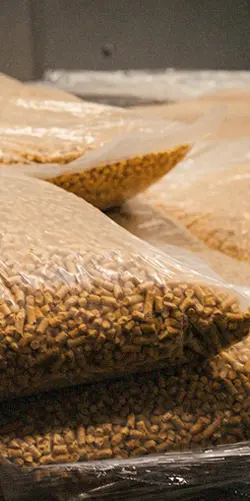
The granules that pass the screening process can then be packaged and sealed. They are then ready for transportation or storage.
06
All cotton stalk pellet making machines
As a professional cotton stalk pellet machine manufacturer, we have a 60,000-square-meter factory, a complete set of equipment for cotton stalk pelleting, and conduct specialized equipment quality testing. This allows us to quickly help customers start pelleting production.
Cotton stalk cleaning machine
Cotton stalk shredder
Grinder
Cooler
Grinder
Grinder

Cotton stalk cleaning machine
We manufacture various types of cleaning machines for different raw materials and impurities, including iron separators, cylindrical primary cleaning screens, etc. These machines can efficiently remove iron, dust, and stones.


cotton stalk shredder
Crushers are generally divided into two types: coarse crushing and fine crushing equipment. For long materials such as cotton stalks, they are usually first cut into smaller pieces of 20-40mm, then further crushed.
Drying equipment
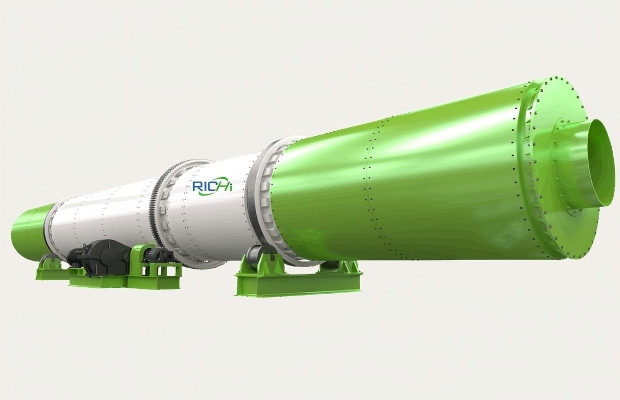
For biomass materials, we generally recommend rotary dryer dryers. They are suitable for fibrous, lumpy, powdery, and viscous materials. The drum speed can be adjusted according to the moisture content of the material.
Cooler
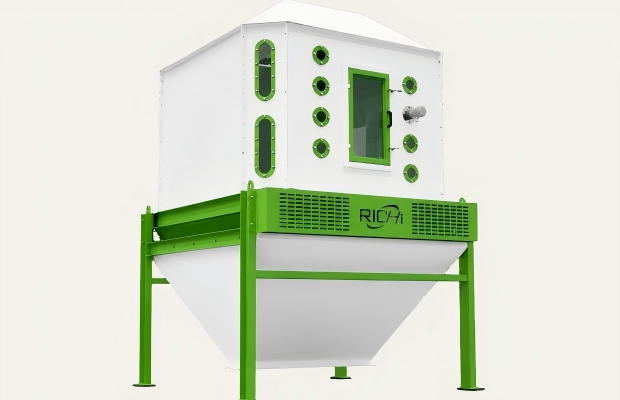
The particle countercurrent cooler can cool high-temperature particles to room temperature in 6-15 minutes.

Screening equipment
By using self-balancing vibration, dust can be removed from the granules. Substandard granules are then sent back to the production line for regranulation, reducing material loss.
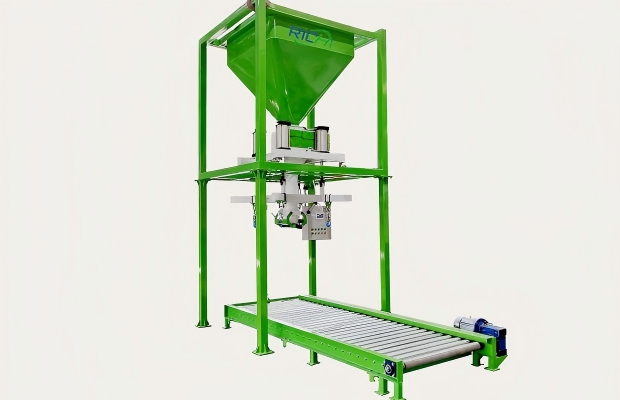
Automatic Packaging Scale
This equipment packages materials into 10-50 kg bags, and is highly automated.
Why Choose RICHI?
By choosing RICHI Machinery, you work with a manufacturer with over 30 years of experience in equipment production and gain a reliable long-term partner. We provide affordable and transparent pricing, along with efficient and comprehensive after-sales service, so you can carry out your feed production with confidence.

Customized design
RICHI has a dedicated R&D and design team to provide you with customized services. We will conduct a comprehensive assessment of your requirements regarding raw materials, production capacity, and pellet type to ensure that all equipment configurations and production processes meet your actual needs.

High-quality equipment production
We own two modern intelligent manufacturing bases and operate a strict quality control system. Every piece of equipment meets international first-class standards. The company has passed BV certification, ISO9001 International Quality Management System Certification, European CE Certification, and Swiss SGS Certification, among others.

Excellent after-sales service
After the cotton stalk pellet machine arrives, our professional engineers will assist with installation and commissioning. They will also provide one-on-one operation training until your team can operate it proficiently.

Frequently Asked Questions
Here are some frequently asked questions. You can also contact us at any time for answers.
Can cotton stalk pellet press process other biomass raw materials?
Yes, the cotton stalk pellet machine is highly adaptable to various raw materials. Besides processing cotton stalks, this equipment can also process agricultural and forestry waste such as corn stalks, rice straw, rice husks, sawdust, peanut shells, sugarcane bagasse, bamboo, palm shells, and sunflower seed meal. However, the size and moisture content of the raw materials must meet the requirements before pelleting.
How effective is the burning of cotton stalk pellets?
In short, cotton stalk pellets are a product that combines environmental protection and commercial value.
Cotton stalk pellets have a high density, and when burned, their calorific value can reach 3700-4000 kilocalories per kilogram, close to that of wood pellets. However, the raw material cost is far lower than that of wood chips, resulting in lower operating costs.
Furthermore, under high pressure, cotton stalk pellets are strong and compact, allowing for more complete combustion and producing significantly less ash than traditional energy sources like coal.
I have 5,000 tons of cotton stalks, but I don’t know if I can build a pellet production line. What data should I provide?
RICHI will help you test your raw materials. You can mail us 5-10 kg of raw materials. We will provide you with data such as cotton stalk moisture content, size, and ash content. Next, we will conduct a trial run for the raw materials to see if they are suitable for granulation. Based on this data, our engineers will design a customized production plan to ensure both capacity and quality.
Do the ring die and pressure roller of a cotton stalk pellet machine need to be replaced frequently?
This will depend on actual production time, raw material characteristics, and maintenance conditions.
For cotton stalks, with regular inspection and maintenance of the ring die and pressure rollers, the typical service life is 500-1200 hours.
In actual production, when you find obvious wear or cracks in the ring die, or slippage of the pressure rollers and a decline in pellet forming quality, these two components need to be replaced.
The RICHI factory keeps spare parts readily available and can provide matching spare parts according to your equipment model and production needs, ensuring the continuous and stable operation of the production line.
How long is the warranty period for cotton stalk pellet machines?
The cotton stalk pellet mill for sale comes with a 12-month warranty. During this period, if you encounter any non-human-caused malfunctions, you can contact our after-sales team, who will quickly provide you with a solution and dispatch specialists to your location for repairs.