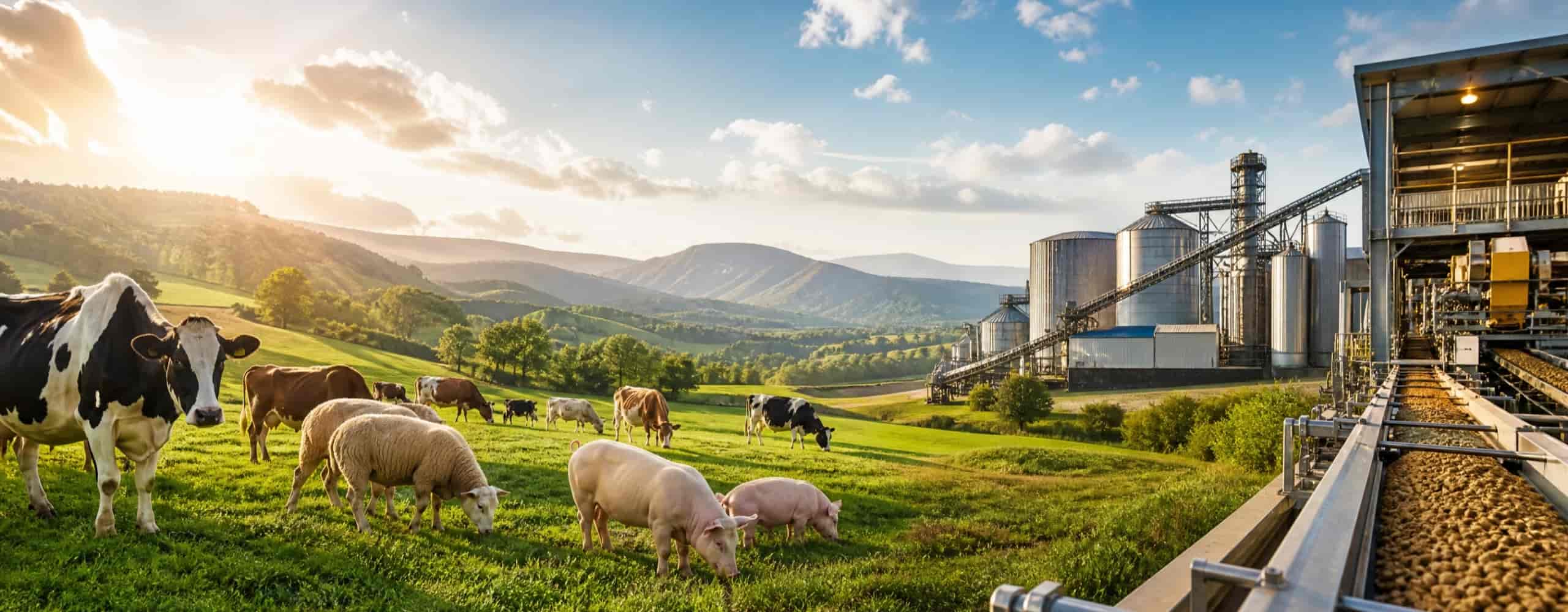
Livestock Feed Production Line
Livestock feed production lines can process various types of feed, such as powders, feed pellets, extruded feed, and premixes. Suitable for various livestock including cattle, sheep, horses, and rabbits.
Livestock feed production line
RICHI livestock feed production lines have a capacity output of 1-100 tons, suitable for farms and feed processing plants of all sizes.
When setting up a production line, many investors first consider these questions:
- Does the production line need to process multiple raw materials (corn, wheat, soybean meal, bran, alfalfa, hay, etc.)?
- Can it produce various livestock feeds to suit different growth stages?
- Do they want to flexibly expand production in the future without replacing the entire production line?
- Can this production line be customized to meet specific needs?
- How are the quality and efficiency of these production equipment?
- Does this animal feed production line have after-sales and maintenance services?
Investment costs
(Dollar)
10,000 – 3,000,000
Pellet size
(mm)
1-12
What you’re thinking about is exactly what RICHI livestock feed production lines have always done. Because we don’t use a fixed template. Instead, we develop customized production solutions based on the actual needs of our clients.
Animal feed production lines feature a modular design, including multiple systems such as crushing, mixing, pelleting, cooling, screening, and packaging. Professional engineers will first conduct a comprehensive assessment of your production goals, budget, raw materials, workshop layout, and level of automation. Only then will we select the equipment and processes that meet your needs. This minimizes unnecessary investment while meeting production requirements.
Features and Advantages
Customization is just the beginning for RICHI’s livestock feed production line. Once it’s in production, you’ll reap the rewards of consistent feed quality, a wider range of product choices, higher production efficiency, and more reliable equipment performance.
Multi-category feed
When processing pelleted feed, you will receive 1-12mm size support, sufficient to cover the needs of different livestock. In addition to livestock feed pellet machines, we offer a full range of pelleting equipment, including feed extrusion machines.
High-quality feed products
Every step of the process has been optimized and upgraded to ensure that each batch of feed has a consistent appearance and balanced nutrition. Standardized quality products will be key to gaining market competitiveness.
High-efficiency production
When designing a production line, engineers will focus on matching equipment capacity. A suitable configuration will enable continuous and stable production.
Automated operation
The fully automated livestock feed production line will be controlled by a PLC system, allowing for real-time monitoring of the entire production line’s operation and reducing labor costs.
Excellent equipment
All equipment has passed national CE and ISO quality inspections. Before shipment, workers will conduct trial runs to ensure the equipment is in perfect working order.
Not only is building entirely new production lines a specialty of RICHI, but factory renovation and upgrading are also areas where RICHI excels. We have accumulated rich practical experience over the past 30 years.
Different types of livestock feed production lines
Livestock feed production lines can produce feed for various livestock, including pigs, cattle, sheep, horses, rabbits, and camels. You can flexibly adjust the formula according to their breed and growth stage. For example, young livestock require more calcium supplementation. Ruminants such as cattle and sheep need more high-fiber ingredients, such as alfalfa and hay.
How exactly is production done? This can be handled by RICHI’s professional team. They will conduct trial runs with the raw materials to determine details such as production processes, equipment configuration, and parameter adjustments, maximizing the retention of nutrients in the raw materials.
Many feed processing plants often use the same production line to produce multiple types of feed. We also have experience in this area. Below, we will introduce some common types of Livestock Feed Production Plants.
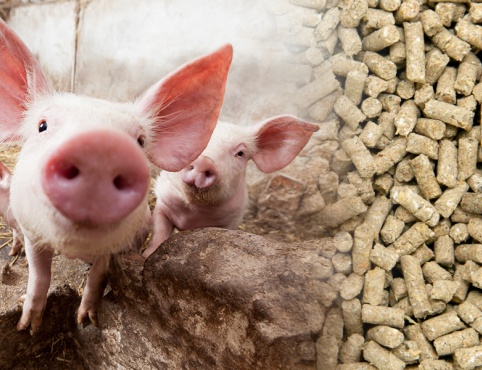
pig feed production line
To ensure optimal growth rates in pigs, precise nutritional formulation is crucial during feed processing. Our automated dispensing system minimizes dispensing errors to within 0.5%, guaranteeing consistent nutrition across every batch.
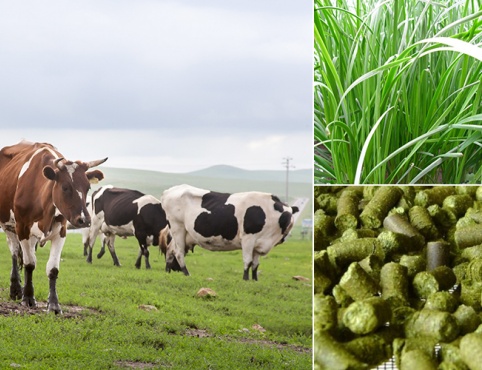
cattle feed production line
In cattle feed production, the processing of fiber raw materials is an essential issue. Cattle feed production lines typically include grinding and conditioning stages to improve pellet formation rate.
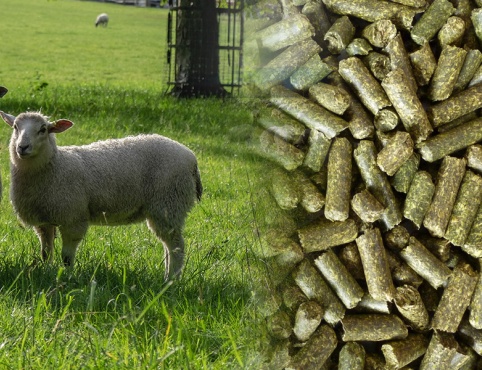
Sheep feed production line
Similar to beef feed, but the pellet diameter is typically smaller, generally between 4-6 mm.
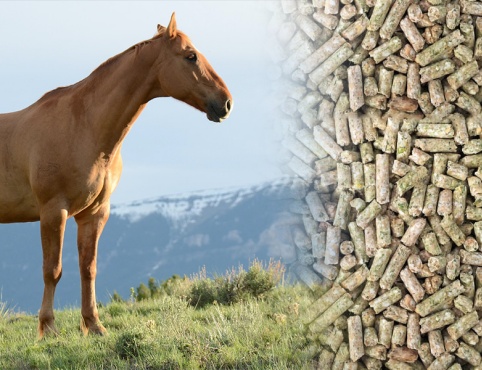
Horse feed production line
Horses have exceptionally sensitive respiratory and digestive systems, so the conditioning system of a horse feed pellet machine can be used to sterilize the raw materials. The resulting pellets will then enter a cooling system with less dust.
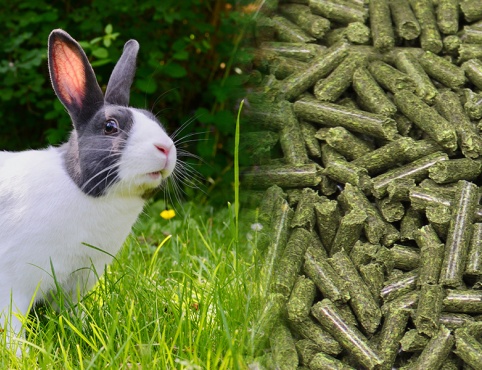
Rabbit feed production line
Rabbit feed formulas have a high proportion of hay meal, so when processing them into pellets, specialized rabbit feed pellet making machines can be used. These machines have larger pelleting chambers and stronger extrusion capabilities, resulting in more compact pellets. Very convenient for rabbits to gnaw on.
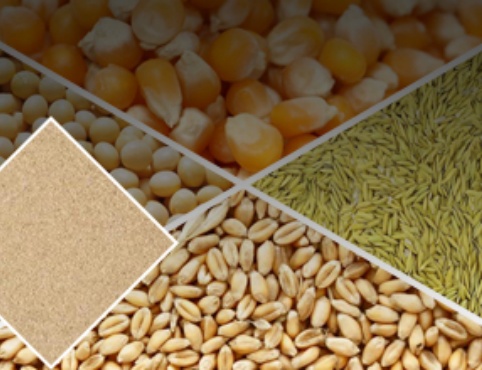
Mixed Livestock Feed Production Line
The mixed feed production line will be equipped with a cleaning process, feed silos, and buffer silos. Reduce residues between different formulations to ensure product quality.
Livestock feed production line process
Generally speaking, a complete feed processing line typically includes stages such as raw material cleaning, grinding, mixing, pelleting, cooling, and packaging. However, some steps can be omitted. For example, when processing premixes or powders, a pelleting process is generally not included. Steps like drying and grinding also depend on the state of your raw materials.
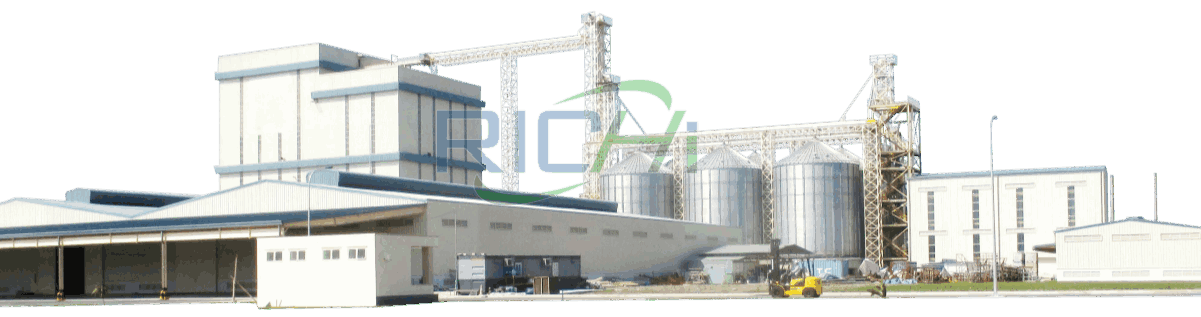
Cleaning raw materials
Keeping the raw materials clean is a crucial step in improving feed pelleting. Our main cleaning equipment includes iron removers, cleaning screens, and permanent magnet drums. These can quickly remove iron blocks, stones, and other impurities from the raw materials.
Crushing Section
The main purpose is to crush the raw materials into fine particles of 3-5mm to facilitate further granulation. If smaller particles are required, a secondary crushing process may be necessary.
Batch and Mix
Manual or automatic ingredient dispensing is available, depending on actual production needs. After dispensing, vitamins, minerals, and other trace elements can be added in the mixing stage. The mixer will evenly incorporate these nutrients into each granule.
pellting process
This step depends on the type of feed. Powdered feed can be screened and packaged at this stage. However, if producing feed pellets, animal feed pellet mills and extruders are the main equipment. After conditioning, the raw materials are extruded into uniform pellets by pressure rollers and ring dies.
Cooling section
When the granules first come out of the machine, their temperature is very high and their hardness is not up to standard, so they need to be cooled. The main equipment for this step is a cooling machine. It can cool and solidify the granules, preventing them from becoming moldy and cracking.
Packaging
This is the final step in the livestock feed production line. An automatic baling scale weighs the finished product. You can choose different sizes from 10-50KG.
Equipment used in livestock feed production lines
This section lists equipment that might be used in poultry feed production lines. Of course, it’s not limited to these. If you’d like to learn more, please feel free to contact our sales staff.
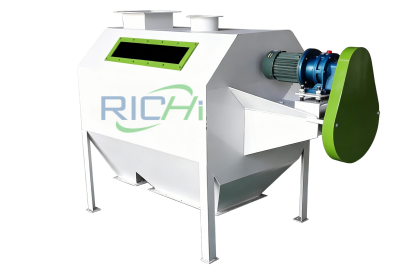
Permanent magnet cylinder
It can remove iron impurities from raw materials.
- power:0.75-1.5KW
- Output:15-50T/H
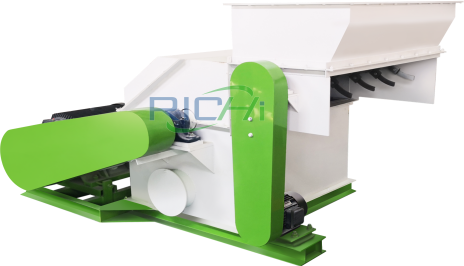
hay shredder
Specifically designed for crushing lightweight materials such as hay and alfalfa.
- Output:0.5-6 T/H
- Power:22-110KW
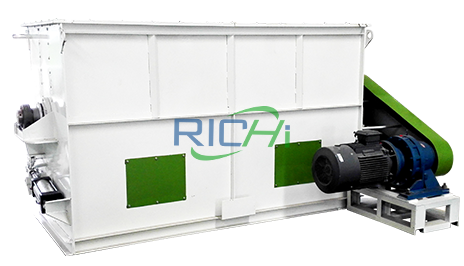
Livestock feed mixer
Suitable for mixing granular, lumpy, flake, mixed, and viscous materials.
- Output :250-2000 KG/P
- Power :5.5-30 kW
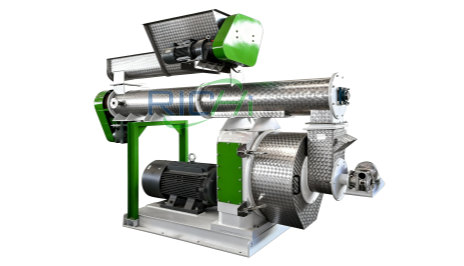
Livestock feed pellet machine
When processing forage containing grass, pellet mills are equipped with anti-arching and forced feeders to ensure smooth feeding.
- Output::1-40T/H
- Power: 22-250 kW
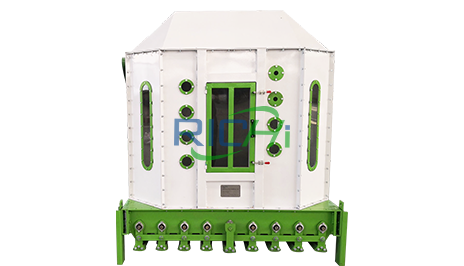
Feed pellet cooler
The relative flow of cooling air and material allows the particles to cool to room temperature.
- Output::1-40 T/H
- Power:1.5-2.2KW
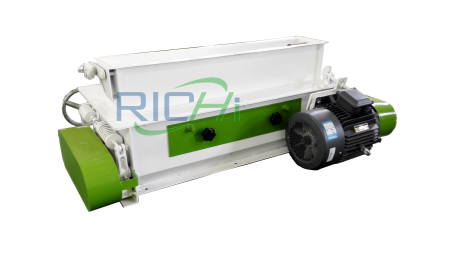
Pellet Crumbler
Suitable for young livestock. Crush whole pellets into 0.3-3mm pellets.
- Output: 3-8T/H
- Power: 4-20KW
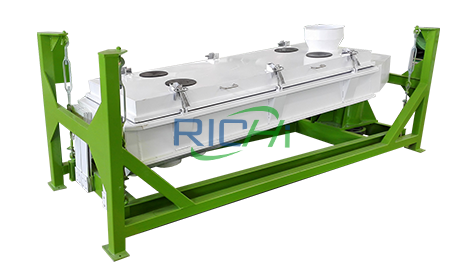
Screening machine
Its main function is to select out broken or misshapen particles to ensure the quality of the finished product.
- Output::1.5-5.5 T/H
- Power:3-40KW
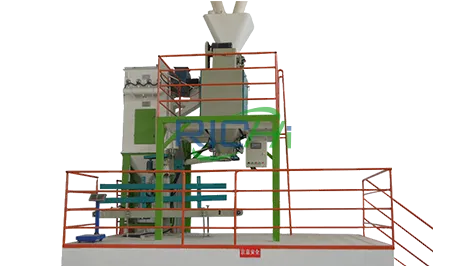
Automatic packaging machine
Composed of mechanical devices and a PLC intelligent system, it has a high degree of automation.
- Output: 6–8 bags/min
- Power:0.55-2.5KW
Livestock feed production line project case studies
To find a high-quality manufacturer of production line equipment, don’t just listen to what they say. Look at their portfolio. RICHI has designed and built livestock feed production lines for clients in over 140 countries worldwide. Durable equipment, scientific production processes, and comprehensive after-sales service have enabled many clients to get started and achieve stable profits quickly. Below are some typical case studies. You can click the button below to learn more.
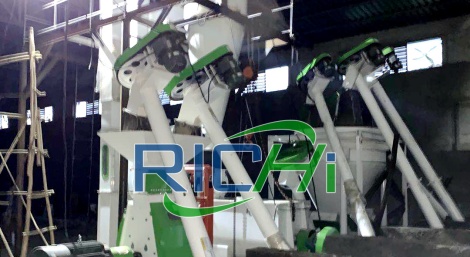
3-4T/H Uganda Livestock Powdered Feed Production Line
This production line primarily produces powdered pig feed. The customer is a local pig farming cooperative with a total pig population of approximately 6,000. To cope with the continuously rising cost of purchased pig feed, the cooperative decided to jointly invest in building a livestock feed production line for centralized feed supply.
RICHI equipped this production line with a precision batching and mixing system. The customer can flexibly adjust the feed formulation to meet the different production needs of piglets, sows, and finishing pigs.
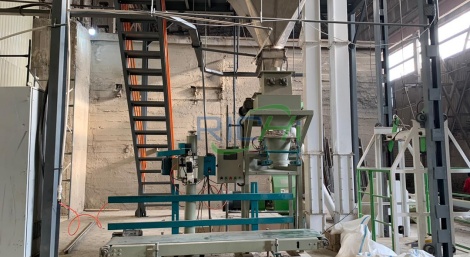
5-6T/H Livestock Premix Production Line in Uzbekistan
The client, a professional cattle and sheep feed processing plant, commissioned RICHI to build a dedicated premix production line for cattle and sheep. He specifically requested that the uniformity of the mixing of various additives meet certain standards. Ultimately, this mixture, along with energy raw materials, will produce high-quality complete feed.
The mixing system utilizes a twin-shaft paddle mixer, which is highly efficient and energy-saving. It can uniformly mix limestone powder, dicalcium phosphate, salt, trace elements, and vitamins in a relatively short time.
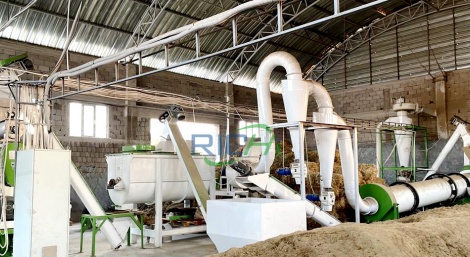
Argentina 3T/H Livestock Feed Production Line
The customer’s raw materials consist of approximately 50%-80% hay, primarily used for processing various cattle and sheep pellet feeds.
Raw material considerations were given special attention when designing this cattle feed production line. A drying system was specifically added to ensure the fresh hay is dry. Meanwhile, a dedicated hay pellet machine is the core equipment, easily handling various high-fiber raw materials. Through formulation and extrusion processes, nutritionally balanced cattle and sheep feed is produced.
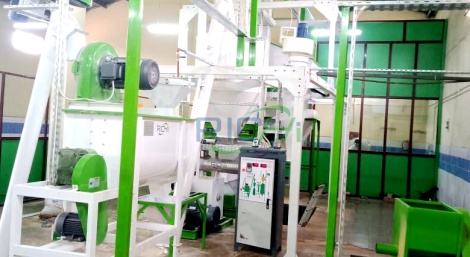
2T/H Livestock Feed Production plant in Malawi
This is a piglet feed production line in Malawi. Because piglets’ digestive systems are not yet fully developed, the feed pellets need to be nutritionally balanced, easily digestible, and palatable. The final product pellet diameter is between 1.5-2mm.
The production line uses a two-stage grinding and mixing process. After production, the pellets are ground again to form pellets more suitable for piglets. Not just suckling pigs. After the customer adjusts the feed formula, feed pellets suitable for both sows and finishing pigs are produced simultaneously.
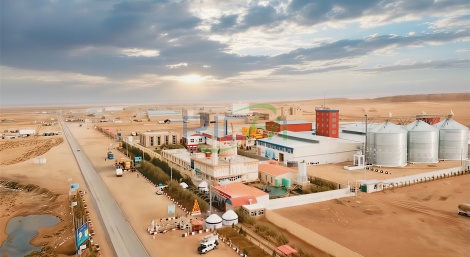
Afghanistan 10T/H Livestock and Poultry Feed Production Line
We can provide more than just single-category feed production lines. This is a multi-functional livestock feed production line, simultaneously producing feed for livestock and poultry.
To improve production efficiency, the entire line uses a PLC system, allowing for one-button adjustment of process parameters. Cattle, sheep, and chicken feed production is seamlessly integrated, minimizing downtime.
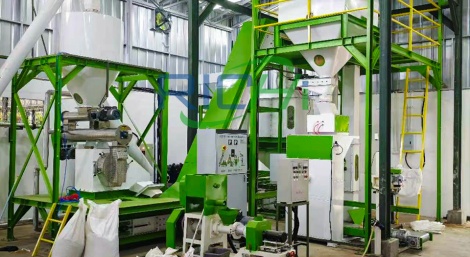
A 1-2T/H compound feed production line in Indonesia
RICHI can also set up a production line for both aquatic and livestock feed. A client from Indonesia wanted to produce both floating fish feed and livestock feed simultaneously.
This production line solution ensures flexible production while achieving low-cost investment. Livestock and fish feed production are carried out on separate lines, sharing the same crushing, mixing, and cooling equipment. Furthermore, the fish feed pellet making machine utilizes a low-cost single-screw extruder. Its simple structure and easy operation make it an ideal choice for small-scale fish feed production.
Livestock feed production line video
Here are some real videos of livestock feed production lines for your reference.
Tanzania 2-3T/H Livestock and Animal Feed Production Line
10T/h Livestock Feed Processing Line In Uzbekistan
Specialty Livestock Feed Production Line Solutions
RICHI’s customized feed solutions extend beyond conventional feed production lines. We have done all kinds of special projects, such as the renovation of old production lines, high-quality feed production, and multi-line parallel production. Below, we’ll demonstrate how to combine different process systems to create a flexible and efficient livestock feed production line.
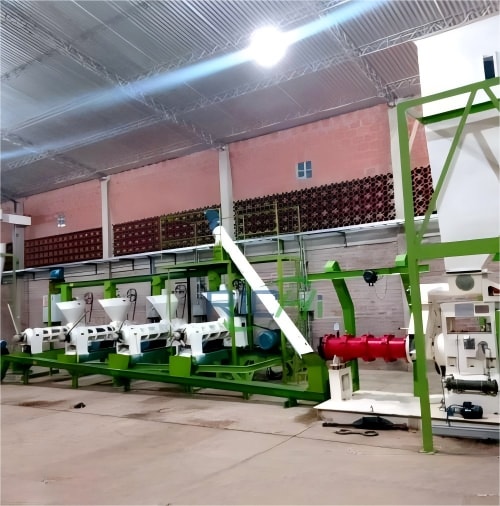
6T/H Grain Extrusion and Livestock Feed Pellet Production Line
Feed Type: High-quality pig feed pellets
Production Process: Raw grain extrusion – Crushing and mixing – Pelletizing – Cooling and screening – Packaging
Main Equipment: 4 raw grain extruders – Hammer mill (with dust removal system) – Pig feed pellet machine (single-layer conditioner) – Counter-current cooler – Vibrating screen – Automatic baling scale
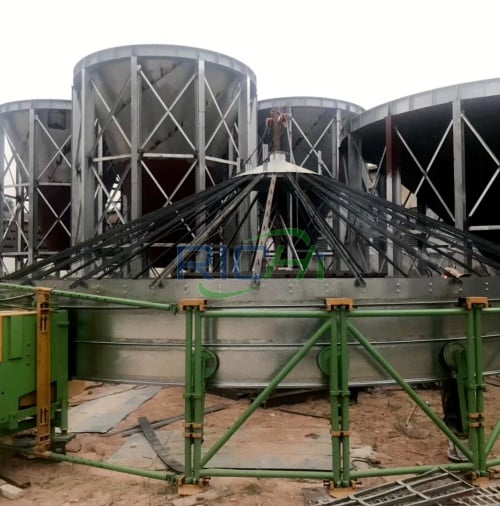
10T/H poultry, livestock and aquatic feed production
This project also includes six 800T silos, with a total storage capacity of 4,800 tons, for storing various grains such as corn, wheat, and soybean meal. This configuration can meet the customer’s needs for large-volume, multi-variety feed output.
Process Flow: Cleaning – Primary Crushing – Mixing – Secondary Crushing – Secondary Mixing – Pelletizing (for livestock and poultry feed) – Extrusion (for fish feed pellets) – Drying – Cooling and Screening – Packaging
Main Equipment: Hammer Mill – Raw Material Silo – Twin-Shaft Mixer – Ultrafine Grinder – Countercurrent Cooler – Circulating Dryer – Rotary Grading Screen – Automatic Packaging Scale
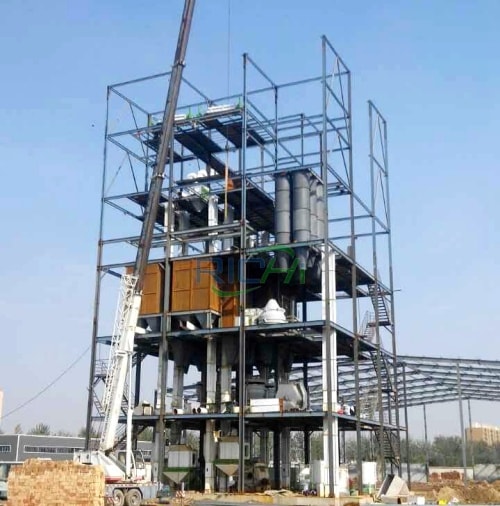
Upgrading of 15-20T/H old livestock feed production lines
The existing crushing and packaging sections can still operate stably. We adopted a modular design, adding mixing, pelleting, cooling, and screening sections in the middle.
Main equipment: Twin-shaft paddle mixer, livestock feed pellet mill, cooler, rotary grading screen
Why Choose RICH?
RICHI operates its own manufacturing facilities for animal feed production line equipment, meticulously crafting trusted premium brands. Entrusting RICHI with your production line construction means we handle everything from process design, equipment manufacturing, civil engineering guidance, installation and commissioning, personnel training, to the final production of qualified pellets—saving you time, effort, and worry!
RICHI Machinery understands feed and excels in handling diverse raw materials. Our designers develop optimal solutions tailored to specific ingredients, ensuring each process step aligns perfectly with your material characteristics for maximized pelletizing efficiency.
Production Processes Refined to Perfection

RICHI pursues innovation in mechanical design. From our first-generation belt-driven pelletizer to the sixth-generation gearbox direct-drive and intelligent cloud control system, we complete a core upgrade every 18 months. Through innovation, we help you reduce energy consumption, labor, and maintenance costs per ton of feed to industry lows.
Professional and Rigorous Process Design

RICHI prioritizes every design detail and approaches each project launch with utmost diligence. Through meticulous calculations and precise measurements, we ensure maximum data accuracy and feasibility. Dual-redundant systems for weighing, steam, and air supply enable instant failover, guaranteeing efficient animal feed production line operation.
Dedicated Customization Philosophy

RICHI’s ultimate goal is to meet diverse client needs, meticulously crafting the most suitable livestock feed production line processes for each customer. Enjoy bespoke services where everything—from equipment to factory layout—is tailored precisely to your requirements, ensuring that every dollar invested truly maximizes output and profitability.
Frequently Asked Questions
Various issues may arise during the procurement and operation of equipment for an livestock feed production line. Below are several of the most common problems, which we hope will be helpful to you:
1. How much does a livestock feed production line cost?
+
Prices vary depending on production volume and process configuration. They generally range from $10,000 to $3,000,000.
| Capacity | livestock feed production price (USD) |
| 1-2 T/H | 10,000-50,000 |
| 3-4 T/H | 50,000-120,000 |
| 5-7 T/H | 70,000-250,000 |
| 8-10 t/h | 150,000-300,000 |
| 12-20 t/h | 250,000-580,000 |
| 25-40 t/h | 450,000-850,000 |
| 50-60 t/h | 900,000-1,400,000 |
| 60-80 t/h | 1,450,000-1,800,000 |
| 80-100 t/h | 2,000,000-30,00,000 |
This only covers the equipment cost for the entire production line. If you want to calculate the total investment cost of the production line, you must include land costs, construction costs, electricity costs, and raw material costs. The easiest way is to contact us directly. You will then receive detailed and accurate cost information.
2. What raw materials are suitable for processing in livestock feed production lines?
+
There are virtually no limitations. One crucial factor in designing the production line is the raw materials. We incorporate crushing and drying processes to reduce the moisture content of the powdered raw materials to 15-18%, which is the optimal state for pelleting.
Livestock feed typically includes various raw materials such as corn, wheat, bran, soybean meal, cassava flour, alfalfa, hay, vitamins, minerals, and fishmeal. There are also some regionally specific raw materials, such as sorghum, palm fiber, and insect protein. We have conducted raw material testing on these and successfully implemented them in production.
If you have any doubts about whether your raw materials are suitable for production, you can send them to us for testing.
3. How long does it take to install a production line?
+
Generally, it takes 15-180 days. The higher the output and the more complex the process configuration, the longer the time required. A small feed production line of 1-5T/H can usually be completed within a month. However, for a large production line including silos, the entire project cycle may reach 3-6 months.
4. Is there installation training?
+
Yes, firstly, we will provide detailed tutorial videos and manuals to ensure customers complete the basic equipment installation. If needed, we will dispatch experienced engineers to the site for installation guidance and operation training. Generally, your operations team can fully master the production line operation procedures within 1-2 days.
5. How long is the equipment warranty?
+
All devices come with a 12-month warranty and lifetime technical support.