Straw Pellet Mill

Particle diameter:
2-12mm adjustable to meet different fuel and feed requirements
Raw materials:
Corn stalks, wheat stalks, barley stalks, rice stalks, etc.
Certified for Quality:
CE & ISO Standards
Customized design:
We can customize straw pellet machines and production lines to meet your specific needs.
Wide Capacity Range:
1-40T/H——Suitable for large, medium, and small particle processing plants
What is a Straw Pellet Mill?
Straw pellet mills can transform agricultural waste into a profitable product. In traditional methods, tons of straw often remain as waste, destined for direct burning or rotting. However, straw pellet making machines have changed this.
Compared to animal feed pellet mills, straw pellet machines have a more powerful compression system. They effectively break down the fibrous structure of straw, forage, and other materials, ultimately producing stable, compact, environmentally friendly pellets that significantly reduce losses during transportation and storage.
Compressed straw pellets are an ideal alternative to traditional fuels like coal. These pellets not only burn more completely but also effectively reduce smoke and dust emissions. They are an ideal choice for those seeking both environmental and economic benefits.
From Waste to Profit: How the Straw Pellet Mill Works
The straw pellet mill is very easy to operate. Simply feed the crushed straw into the mill, and you’ll receive smooth, uniform biomass pellets from the discharge port.
A straw of suitable moisture content and size enters the pellet mill through the feed inlet.
In the enlarged pelleting chamber, pressure rollers rotate at high speed, pressing the material tightly against the ring die. During this process, the straw lignin softens into a natural binder, which is extruded from the die holes to form long strips.
The cutter quickly cuts the material to the specified length, transforming this agricultural waste into high-value-added clean-burning pellets.
Why choose a straw pellet mill?
Straw pellet mills are no longer a niche product. They are becoming an important investment area in agriculture and environmental energy. RICHI Machinery’s straw pellet machines, made with superior materials and scientifically designed, are specialized rice straw pellet manufacturing equipment that can be used efficiently for extended periods, helping you achieve sustained and stable economic returns.
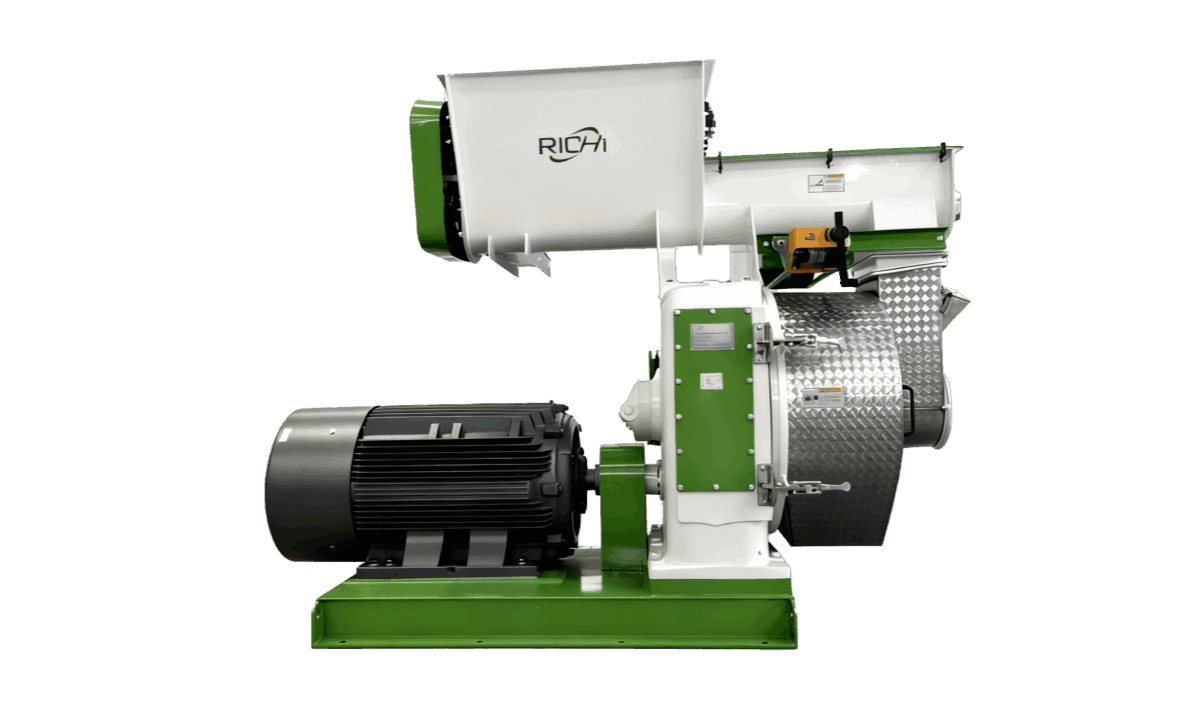

Highly efficient and stable feeding system
The arch-breaking feeder and the forced feeder break up the straw and feed it evenly into the pellet mill, helping the pelleting process to proceed smoothly.
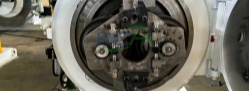
Precision wear-resistant pelleting system
Key components such as the ring die, pressure roller, and cutter are all made of alloy steel-42 chromium molybdenum, which can effectively resist the wear of high-fiber materials.
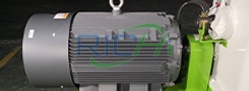
High-efficiency and low-consumption drive system
Siemens motors, equipped with precision gear drives, minimize power loss. Over the long term, this effectively reduces energy costs.

Security protection system
During granulation, the integrated frame structure prevents easy movement, ensuring stable and efficient granulation. Safety pins prevent machine overload and extend equipment lifespan.
Advantages of the straw pellet mill
Easy to operate and maintain

The straw pellet mill is highly automated. You only need to put the material into the pellet mill, and the rest of the work is done automatically, producing high-quality pellets. For convenient daily maintenance, the equipment is equipped with a convenient ring die lifting machine and an automatic lubrication system, reducing downtime losses caused by complex maintenance.
High-quality granules of various specifications

The eccentric shaft design of the pressure roller ensures a consistent gap between the ring die and the pressure roller, resulting in uniformly sized pellets. More importantly, if you require different pellet sizes, we offer various die openings from 2-12mm to produce straw pellets suitable for different applications, helping you expand into diverse markets.
Affordable customized design

We offer straw pellet mills with varying capacities. If you are using it yourself or processing and reselling on a small scale, you can choose a compact and convenient small-scale model. For large-scale straw pellet production, our industrial models are ideal for you, helping you achieve continuous and stable production. The straw pellet mill for sale is the core equipment of the production line, and our professional technical team can tailor an economical and efficient straw pellet production line to your specific needs.
The Parameters of the Straw Pellet Mill
Below are the specific model parameters for straw pellet mills. If you do not have suitable production capacity, you can contact us directly to customize a dedicated production solution.

| Model | CZLH320 | CZLH350 | CZLH420 | CZLH520 | CZLH678 | CZLH768 |
| Main Motor Power (kW) | 22 | 37 | 90 | 132 | 200 | 250 |
| Arch-Breaking Feeder Power (kW) | 2.2 | 2.2 | 3 | 3 | 3 | 4 |
| Forced Feeder Power (kW) | 0.75 | 0.75 | 1.5 | 1.5 | 1.5 | 1.5 |
| Die Inner Diameter (mm) | 320 | 350 | 420 | 520 | 673 | 762 |
| Finished Pellet Diameter (mm) | 4~12 | |||||
| Output (T/H) | 0.5-0.6 | 1.0-1.2 | 1.8-2.0 | 2.8-3.0 | 4-5 | 6-8 |
How to process different raw materials in a straw pellet mill
Straw pellet mills are adaptable to a wide range of raw materials. However, these materials vary in moisture content and shape. Before entering the pellet mill, they need to undergo a series of processes to help them reach the optimal pelleting state, ultimately producing high-quality pellets efficiently and stably.
The following are just some common raw material processing methods. You can tell us the condition of the raw materials to obtain more detailed information.
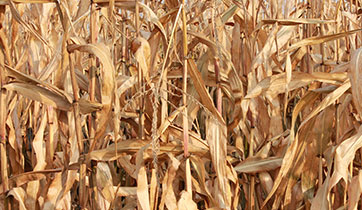
•straw
- Raw materials: corn stalks, wheat stalks, rice straw, etc.
- Applications: Livestock feed or general fuel
The hollow stem makes it easier to store moisture. Before pelleting, the moisture content can be reduced to between 12-18% by natural air drying or professional drying equipment, resulting in better pellet formation and less susceptibility to mold.
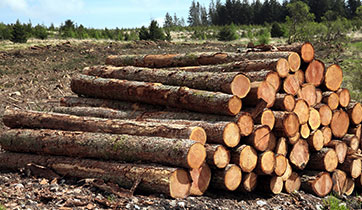
• wood
- Raw materials: sawdust, bamboo shavings, branches, etc.
- Applications: High-end biomass fuel
If these hard raw materials are pelleted directly, they can easily cause the machine to jam, shortening the lifespan of the straw pellet press. However, by crushing the raw materials into 3-5mm wood chips or sawdust using a pulverizer, the high pressure of the pellet mill can form high-density, heat-resistant pellets.
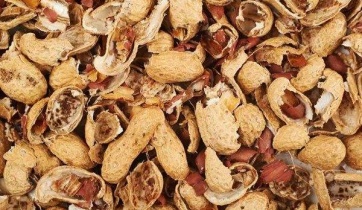
• Shells
- Raw materials: peanut shells, rice husks, corn cobs, etc.
- Application: Boiler combustion pellets
Shells are naturally small, fragmented materials. Processing them requires only slight crushing for easy cutting. After high-temperature extrusion, the lignin in the shells helps bind the material into a cohesive shape. Furthermore, the shells naturally contain oils, which, after pelleting, result in a longer burning time.
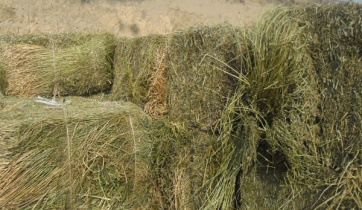
•Forage and green fodder
- Raw materials: alfalfa, grass, weeds
- Applications: Ruminant feed for cattle and sheep
If your raw material is fresh grass, then equipment such as a dryer is essential to reduce the moisture content to a safe range. Of course, overly dry raw materials are also very unfavorable for pelleting. In this case, the straw pellet mill can be equipped with a modulator to adjust the moisture content of the raw material, thereby obtaining compact pellets.
What kind of pellets do you want to produce using a straw pellet mill?
Straw pellet mills can process various types of pellets and are suitable for livestock farming, energy, and agricultural planting. You can use this equipment flexibly according to your production needs to help you achieve diversified revenue.
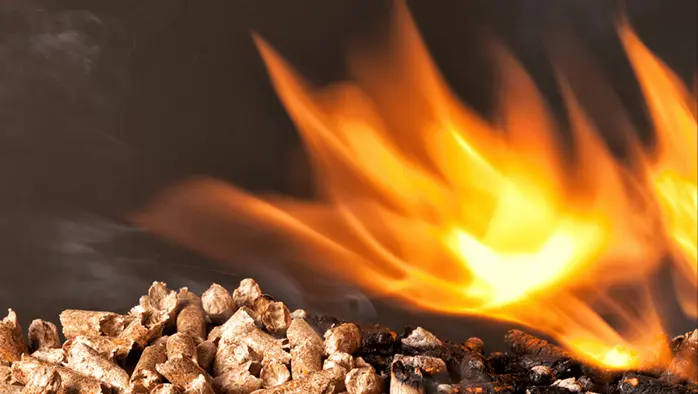
RICHI Machinery
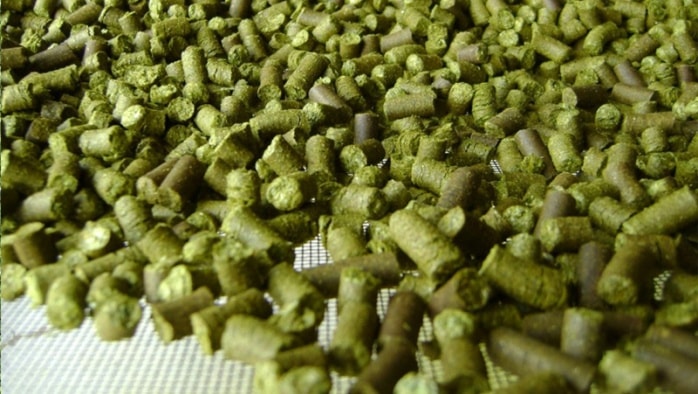
Biomass fuel pellets
Applicable scenarios: Biomass energy plants, factory boilers, community heating, and household fireplaces.
Advantages:
- High particle density and small volume make transportation and storage convenient.
- Compared to bulk straw, it has a higher calorific value and more stable heat output.
- Burning produces no smoke and little ash, which is beneficial to environmental protection.
RICHI Machinery
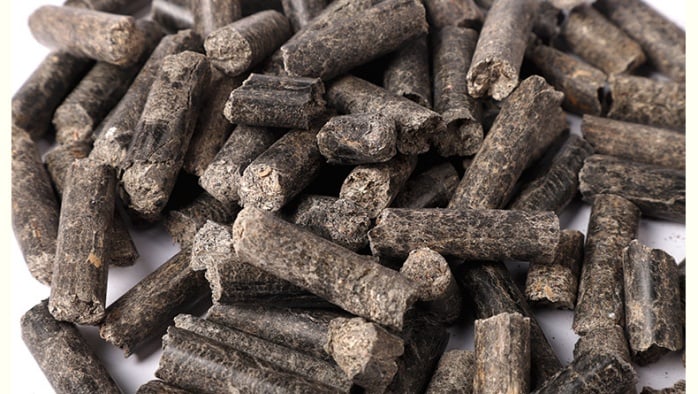
feed pellets
Application areas: Farm breeding, feed processing plant
Features:
- Straw and other coarse fiber raw materials are well-suited to the physiological habits of cattle and sheep, aiding digestion.
- Straw pellets are rich in nutrients, promoting healthier animal growth.
- Straw pellets are durable and can be fed year-round, unaffected by seasonal changes.
RICHI Machinery
Organic fertilizer granules
Applicable scenarios: planting bases, organic fertilizer processing plants, livestock farms, landscaping companies, etc.
Advantages:
- The scientifically formulated blend of straw and livestock manure provides balanced nutrition, promoting healthy crop growth.
- Straw organic fertilizer is high in organic matter, effectively breaking up soil compaction and making the land increasingly fertile with continued cultivation.
- The round, intact straw particles prevent them from being blown away by the wind, reducing waste.
- High-temperature fermentation kills most insect eggs and pathogens, reducing crop diseases.
RICHI Machinery
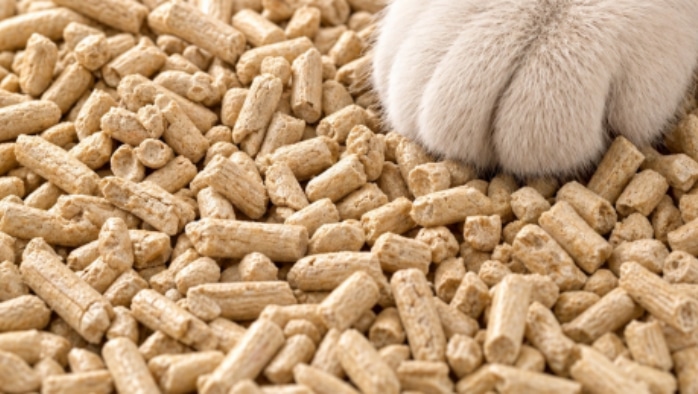
animal bedding
Application objects: Pet breeding bases, pet supply processing plants
Features:
- The straw itself is loose and porous, allowing it to quickly absorb pet urine.
- Natural plant fibers remove fecal odors, ensuring the cage doesn’t become stuffy and smelly.
- The raw materials are all field waste, widely available and inexpensive.
Case studies of the straw pellet mill
Straw pellet mills are now widely used in agriculture, energy, and other industries. RICHI Machinery provides efficient straw pelleting solutions to 2,000 customers worldwide, helping them achieve diversified development.
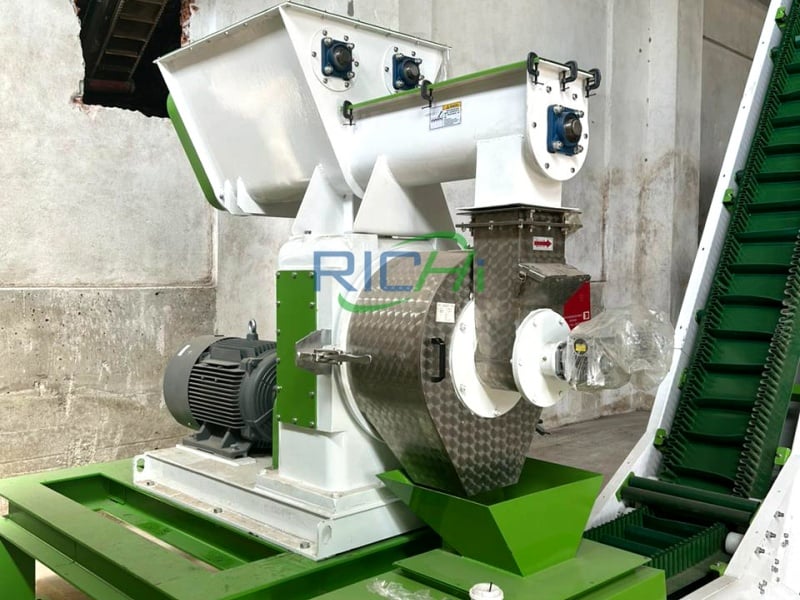
Thai organic fertilizer straw pellet mill
This client is a small organic fertilizer processing plant. They previously only processed agricultural waste into bulk compost. However, significant waste occurred during storage and transportation, and the quality was often unstable due to fermentation conditions, severely impacting sales. Therefore, the client wanted to upgrade their production line, utilizing granulation equipment to produce high-quality organic fertilizer granules suitable for sale.
- Output: 3-5T/H
- Raw Materials: Chicken manure, straw, rice husks
- Pellet Size: 4mm
- Equipment: Straw pellet mill for sale, cooler, shifter
- Installation period: 10 days
- Drawings: Installation drawings of equipment, drawings of steel support parts
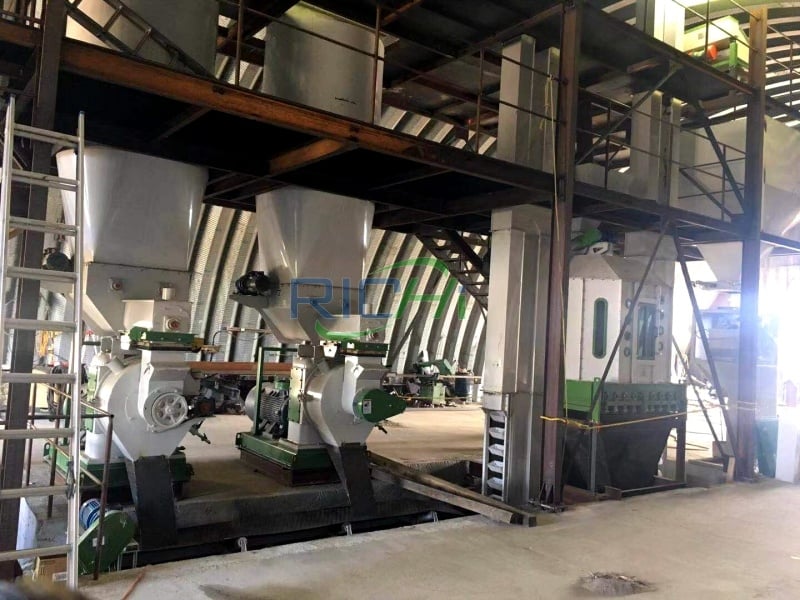
Straw pellet mills for producing biomass fuel in Canada
- Start time L: August 1, 2018
- Client Background: Biomass Energy Plant
- Project Type: Fully Automated Biomass Pellet Production Line
- Capacity: 2-3T/H
- Raw material::50% moisture wood chips, 50% moisture sawdust, Straw
- Pellet Size: 6-12mm
- Main equipment for the project: crusher, shifter, dryer, storage bin, straw pellet machine for sale, cooler, shifter, auto-packing.
- Project site area: 26*20*12meters
- drawing: Layout of line in workshop, foundation drawing, installation drawing of steel structure, installation drawing of equipment, drawing of control cabinet
- Project Challenges: The client’s workshop was relatively small, limiting the layout of conventional production lines. Our engineers redesigned the production line, utilizing a steel frame for vertical construction to reduce the floor space required.
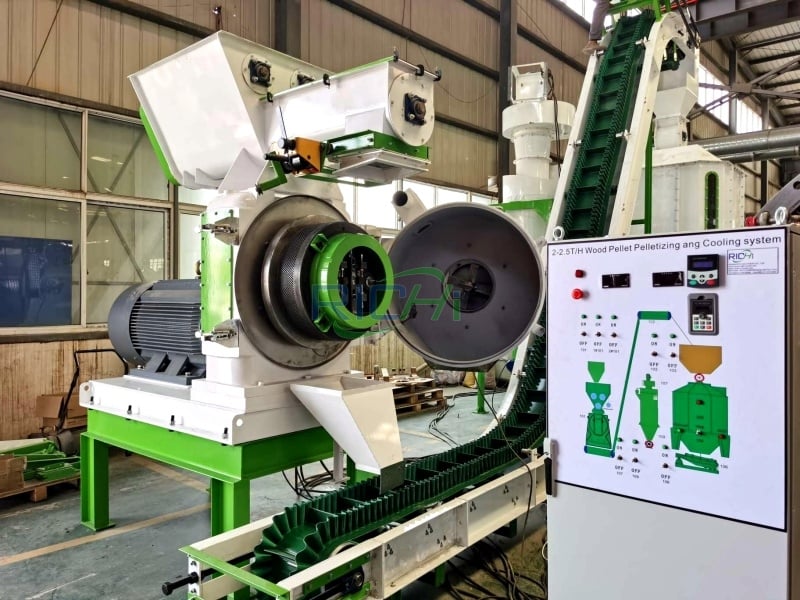
Straw pellet making machines for industrial energy supply in Australia
The project client operates an industrial boiler company. He wants to use local agricultural waste such as straw as raw materials to produce straw pellets, which will be sold to surrounding industrial users who need heat energy.
- Production capacity: 2 tons per hour
- Raw materials: Wheat straw, barley straw, etc.
- Particle diameter: 6-8 mm
- Production line equipment: crusher, batching silo, rice straw pellet making machine, cooler, baling scale
- Project feedback: The equipment operates stably, with a straw pellet forming rate as high as 95%. The combustion heat is stable, and the calorific value does not fluctuate significantly, fully meeting the quality standards of industrial boilers.
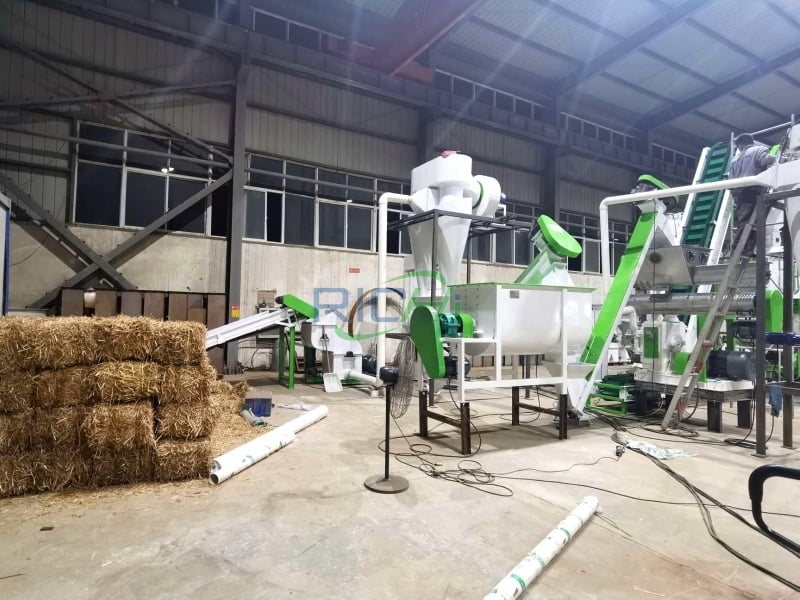
South Africa straw pellet mills for producing feed
- Date: March 23, 2022
- Application: Ruminant feed for goats and cattle
- Raw materials: wheat straw, alfalfa, wheat bran, etc.
- Customer needs: The customer wants to use their own crops to produce feed pellets, saving on feed costs from external suppliers.
- Feed pellet size: 4mm sheep feed, 6-8mm cattle feed pellets
- Production line equipment: Straw pellet mill, mortar, crusher, cooler, packaging system
- Production process: To ensure the palatability of the feed, we have equipped the pellet mill with a conditioner. High-temperature steam softens the fibrous material, which helps the feed pellets form better.

Production process of the straw pellet mill
A complete straw pellet production line consists of a crusher, mixer, dryer, cooler, pelletizer, and baler. However, this is not a fixed configuration. We can design a scientific production line configuration based on your raw material characteristics and production capacity requirements to help you achieve efficient and stable pellet production.
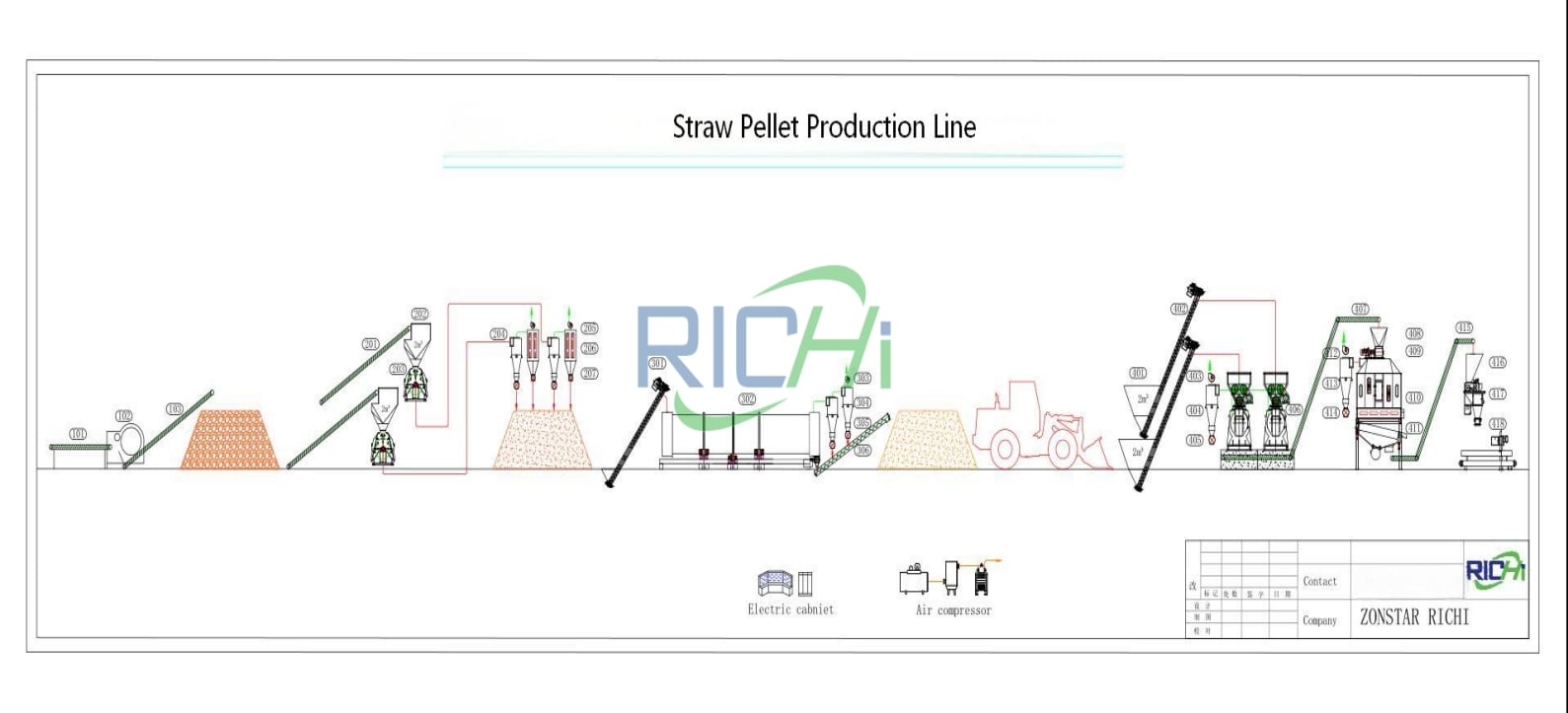
1
Raw Material Cleaning
To prevent impurities from damaging the machine during granulation, the raw materials need to be cleaned to remove foreign objects.
2
Crushing process
Straw crushers break down raw materials into fine powder. In particular, long-diameter raw materials such as straw must be crushed before they can be pelletized.
3
Drying section
The rotary drum dryer rotates continuously, tossing and throwing the raw materials to ensure they come into full contact with the hot air. The raw materials exiting the dryer can then directly enter the pellet mill.
4
Pelletizing section
The enlarged ring die of the straw pellet mill can handle more raw materials at once. At the same time, the ample space allows for easy production of large-diameter pellets, meeting the needs of biomass energy feedstocks.
5
Cooling section
The cool air inside the condenser removes heat and moisture from the particles. This prevents them from molding or breaking during transportation and storage, extending their shelf life.
6
Screening and Packaging
The final step is to sieve out the powder from the granules. The resulting granules are hard and compact, making them ideal for long-distance transportation or storage.
Why Choose RICHI?
By choosing RICHI Machinery, you work with a manufacturer with over 30 years of experience in equipment production and gain a reliable long-term partner. We provide affordable and transparent pricing, along with efficient and comprehensive after-sales service, so you can carry out your feed production with confidence.

Excellent after-sales service

After the straw pellet mill arrives, we will carry out professional commissioning and acceptance. Our technicians will repeatedly commission the equipment in each production section to ensure the equipment operates up to standard. Additionally, if you are unfamiliar with our equipment, RICHI technicians will provide one-on-one on-site training until your team can operate the entire production line independently.
Customized design

RICHI has a dedicated R&D and design team to provide you with customized services. We offer over 200 products to meet all types of chicken feed production needs. In addition, we provide full-process design services, including site planning and equipment layout. Whether you are new to the feed industry or already operating a mature production line, just share your requirements with us, and we will deliver a tailored solution based on your actual situation.
High-quality equipment production

The production stage is the core link of the entire project implementation. We own two modern intelligent manufacturing bases and operate a strict quality control system. Every piece of equipment meets international first-class standards. The company has passed BV certification, ISO9001 International Quality Management System Certification, European CE Certification, and Swiss SGS Certification, among others.

Frequently Asked Questions
Here are some frequently asked questions. You can also contact us at any time for answers.
What is the price of a straw pellet machine?
The price of straw pellet making mills typically ranges from $10,000 to $50,000. Of course, the price will fluctuate depending on your capacity requirements. For example, a 1–2 t/h ring die straw pellet machine costs approximately $20,000–$29,000.
You can directly tell our sales staff your budget and requirements, and they will provide you with a detailed quote within one day.
Why does the output of a straw pellet press fail to reach the rated value?
The standard output of a straw pellet mill is tested under ideal operating conditions. In actual production, it is often affected by factors such as raw materials and operating methods.
The optimal moisture content for straw pelleting is between 12% and 18%. Too high a moisture content will cause severe sticking and blockage of the die orifices. Too dry raw materials are difficult to press into pellets. Therefore, maintaining the appropriate moisture content is a key factor in achieving the rated output.
Furthermore, different raw materials require different compression ratios. A higher compression ratio results in greater extrusion pressure, but correspondingly, the output will be slower. During pelleting, it is important to balance the forming quality and the equipment’s capacity. For specific compression ratio settings, please consult us directly.
In addition, attention must be paid to the maintenance and operation of the equipment. Especially for easily worn parts such as the ring die and pressure rollers, timely maintenance and replacement are essential.
Can a straw pellet mill directly mix multiple types of straw together for pelleting?
Of course you can.
However, the fiber content and hardness can vary significantly between different raw materials. You will need to ensure that the fineness and moisture content of the raw materials are consistent. Before pelleting, we recommend using a mixer to thoroughly mix the raw materials. This will ensure smooth feeding and increase pellet yield.
How long is the warranty on your equipment?
Our straw pellet mill comes with a 12-month warranty. Upon delivery, we provide professional installation guidance and long-term technical support to ensure efficient and worry-free production.