Dog food extruder machine
Dog food extruders utilize advanced extrusion technology to efficiently process high-protein and complex formulations. Capable of producing dense, highly digestible kibble, it is essential equipment for manufacturing high-quality dog food, cat food, and other pet foods.

High-performance dog food extruder machine
The dog food extruder machine is suitable for pet food businesses and processing plants of all sizes. By utilizing high temperatures, shear forces, and compression, the extruder processes ingredients—such as grains, meat meal, plant proteins, fats, and vitamins—into nutritious dog food.
Additionally, by changing the die mold and cutter settings, the shape and length of the kibble can be adjusted to meet the dietary needs of dogs at various life stages.

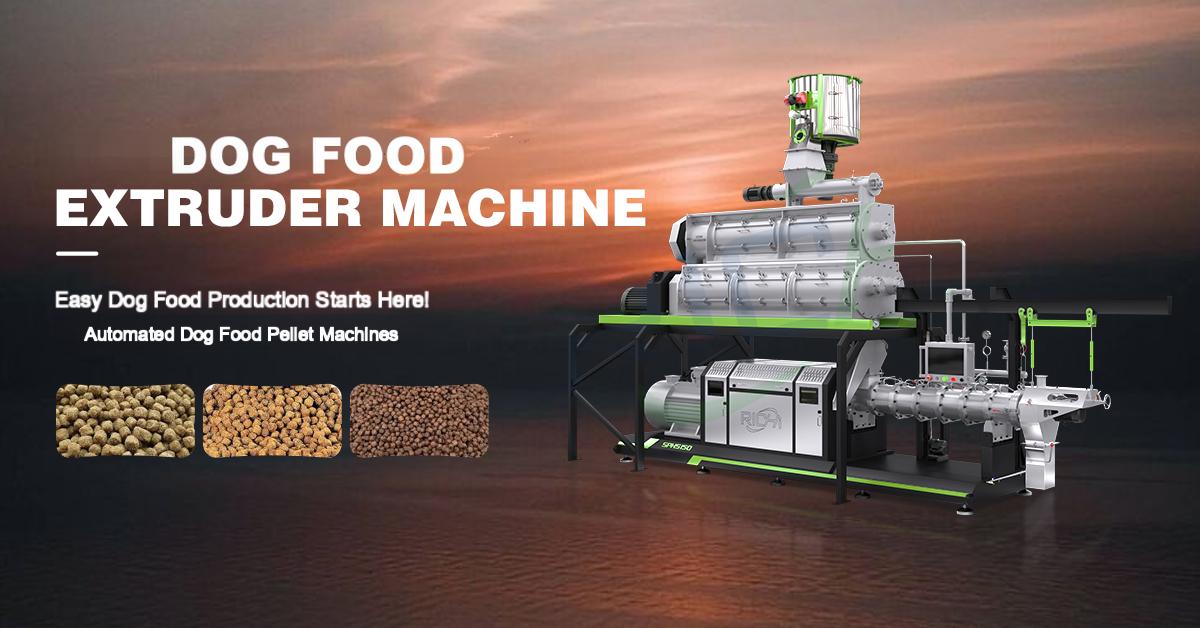
High-performance dog food extruder for sale
To meet diverse production requirements, dog food extruder machines are available in both single-screw and twin-screw models. Single-screw extruders feature a simple design and lower investment costs, making them suitable for smaller feed manufacturers focused on cost-efficiency. To address the need for continuous processing and multi-recipe production, RICHI developed the twin-screw extruder; its extrusion mechanism is less sensitive to raw material characteristics, making it ideal for handling high-fat, high-protein, or complex dog food formulations.
Suitable for Various Formulas
Capable of processing extruded dog food and complex formulations. The equipment features a self-cleaning function that enables flexible transitions between different products, thereby minimizing downtime losses.
Sturdy and durable
The dog food extruder machine is constructed from wear-resistant alloy steel. It easily withstands material-induced wear, offering a service life two to three times longer than that of standard carbon steel, resulting in greater cost savings over the long term.
Flexible Anpassung
The equipment supports production capacities ranging from 0.2 to 12 tons per hour. It can be integrated into a complete production line to enable automated, continuous manufacturing. We will tailor a production plan according to your actual needs.
Demonstration video of a dog food extruder machine
Below are demonstration videos of two different types of dog food extruder machines, which will help you gain a clearer understanding of how they operate and the production results they achieve.
Working principle of the single-screw extruder
The dry-type single-screw dog food extruder machine conveys material through the friction generated by the rotating screw, continuously mixing and compacting the material. As the raw material exits the die, the pressure differential causes it to expand instantly, forming a porous structure, after which a cutter slices it into the desired lengths.
5–6 t/h dry dog food extrusion machine for sale Project in Uzbekistan
Working Principle of Twin-Screw Extruder
Raw materials enter the barrel, where twin screws rotate in the same direction, continuously conveying and shearing the mixture. In the heating zone, internal temperatures reach 20–160°C, rapidly promoting starch gelatinization and protein denaturation. Upon extrusion, a sudden drop in pressure results in the formation of porous, expanded pellets. Finally, a cutter rapidly slices the product into uniform lengths.
Applications of Dog Food Extruder Machines
Different production needs require different performance and configuration requirements for dog food extruder machines. From fixed formulas and small- to medium-scale production to high-oil, high-protein, and multi-formula dog food processing, RICHI offers different types of dog food extruding machines to help manufacturers choose the right equipment based on raw materials, output, and product requirements.
Economical Single-Screw Dog Food Extruder Maschine
Based on the extrusion method, single-screw extruders can be categorized into wet-type and dry-type models. The primary difference lies in whether a conditioning system is included. Dry extruded dog food rely solely on physical extrusion without additional heating, resulting in a simpler production process and a lower price point. In contrast, wet conditioning softens the material at high temperatures, leading to better pellet formation and higher output. Overall, the single-screw extrusion process is easy to operate, making it a suitable choice for feed manufacturers with limited budgets who wish to produce standard dog food.




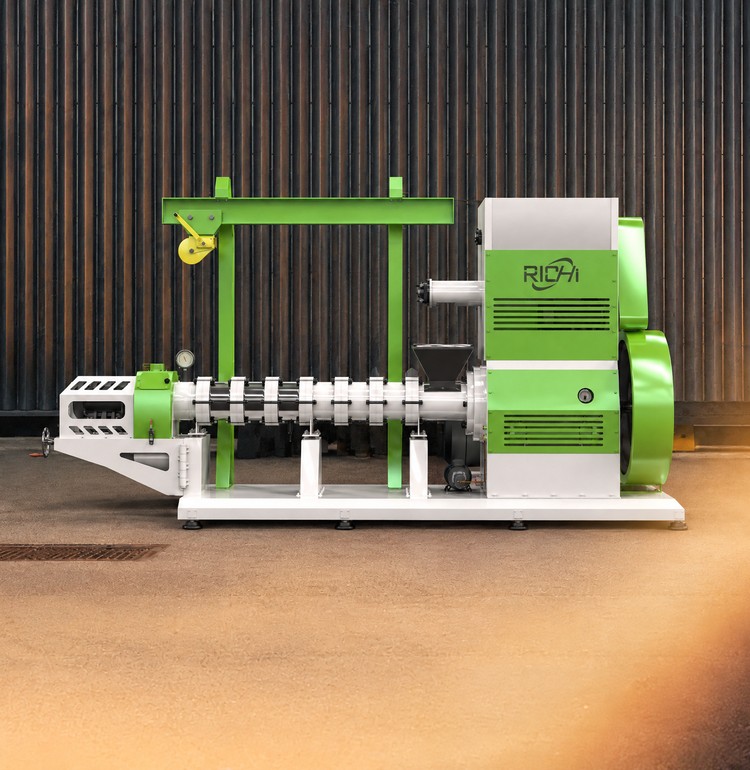
- Key features and advantages: easy operation, low energy consumption, and cost-effectiveness.
- Anwendungsbereiche: fixed-formula dog food, small- to medium-scale dog food production, and basic livestock pellet feed.
Produktionskapazität
0.2–1T/H
Leistung der Anlage
37–75KW
Highly versatile twin-screw dog food extruder machine
The twin-screw dog food extruder machine effectively overcomes the limitations regarding raw materials associated with single-screw designs. Its intermeshing screw structure ensures more stable material conveyance and minimizes slippage. Furthermore, its superior mixing capabilities result in a more uniform blend of nutrients within the feed formula. If you have sufficient capital and aim to produce high-protein, high-fat dog food using diverse formulations, the Doppelschneckenextruder is the ideal choice.
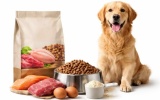
High-protein dog food

Multi-formula dog food
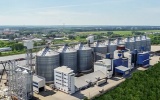
Manufacturer of dog food for medium and large breeds

- Key features and advantages: Uniform mixing and high output, supporting continuous, stable production. Features a self-cleaning system that minimizes material retention and reduces maintenance costs.
- Anwendungsbereiche: Premium dog food with complex formulations; large-scale feed processing plants and premium pet food manufacturers; floating fish feed and high-end livestock/poultry feed.
Produktionskapazität
0.5–12T/H
Leistung der Anlage
55–355KW
The dog food extruder machine Technical components
One cannot simply claim that a dog food extruder machine offers good performance or high production efficiency. To evaluate a high-quality extruder, one must examine every component—understanding its material, function, advantages, and overall structure. Only through the harmonious coordination of these high-quality parts can the equipment operate reliably and consistently produce uniform, high-quality dog food.
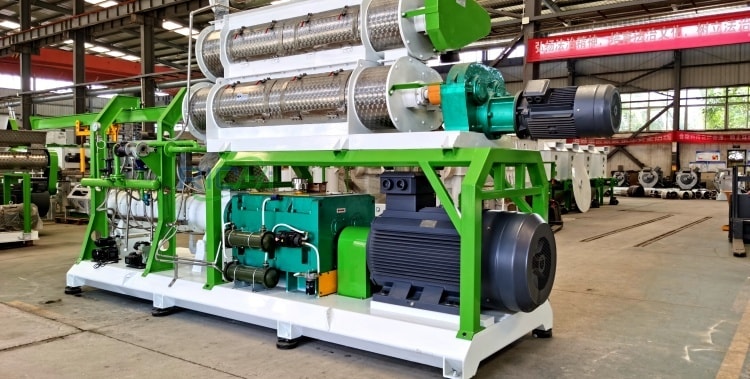
Main Motor
Provides power to the dog food extruder machine, driving the rotation of the gearbox and the screw.
Variable frequency speed control motor
Siemens motor is equipped with a variable frequency drive (VFD), allowing it to automatically adjust power consumption based on specific operational needs. For customers requiring continuous dog food production, this results in significant electricity cost savings over the long term.
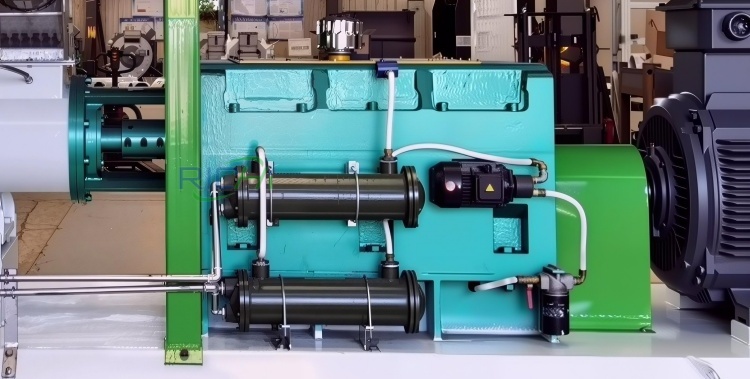
Getriebe
It employs a gear drive system to efficiently transmit power to the two screws.
Hocheffizientes Getriebe
High-precision, hard-faced gears ensure a long service life. With a transmission efficiency exceeding 98%, they provide stable, continuous driving force to the screw.
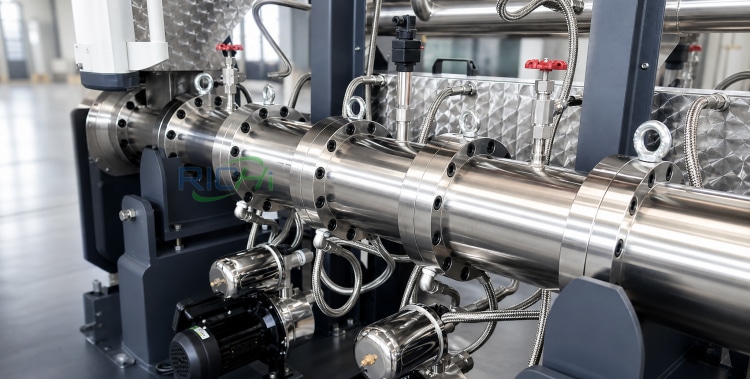
Screw
This component conveys, compresses, shears, mixes, and cooks the raw materials.
Adjustable screw
Screw configuration is modular, allowing it to adapt to various dog food formulas—such as those with high fresh meat content, low fat, or hypoallergenic properties. Additionally, individual screw segments subject to wear can be replaced separately, resulting in low maintenance costs.
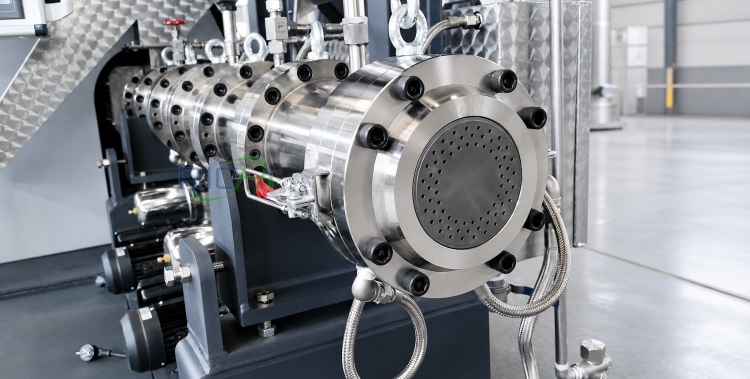
Mold Head
The mold head determines the size and shape of the dog food.
Wear-resistant mold
As a wear-prone component, the die is made of wear-resistant alloy steel, effectively withstanding material erosion. Additionally, each die hole undergoes a polishing process, ensuring the extruded pellets are smooth and free of burrs..
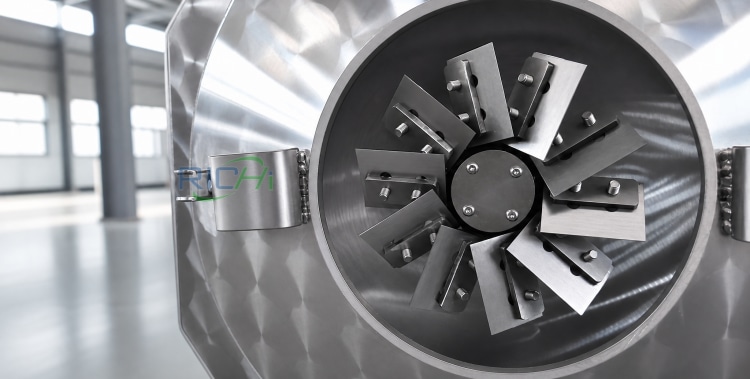
Schneider
The cutter slices the extruded material into dog food pellets of a fixed length.
Stable cutter
Cutter position is adjustable to control pellet length. Cutting is stable, preventing material breakage or pellet fragmentation.
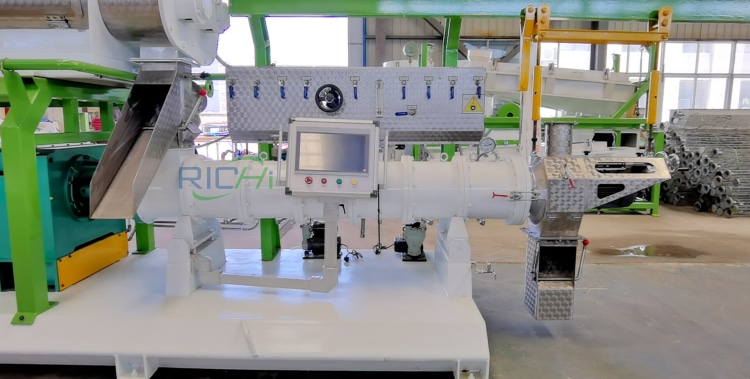
Electronic Control System
An intelligent PLC system enables integrated control of the granulation process, ensuring production safety.
Protection device
Production formula can be flexibly switched, the operation is simple, and the downtime is reduced. Once overload or overtemperature occurs, the travel switch will be automatically closed to reduce equipment damage.
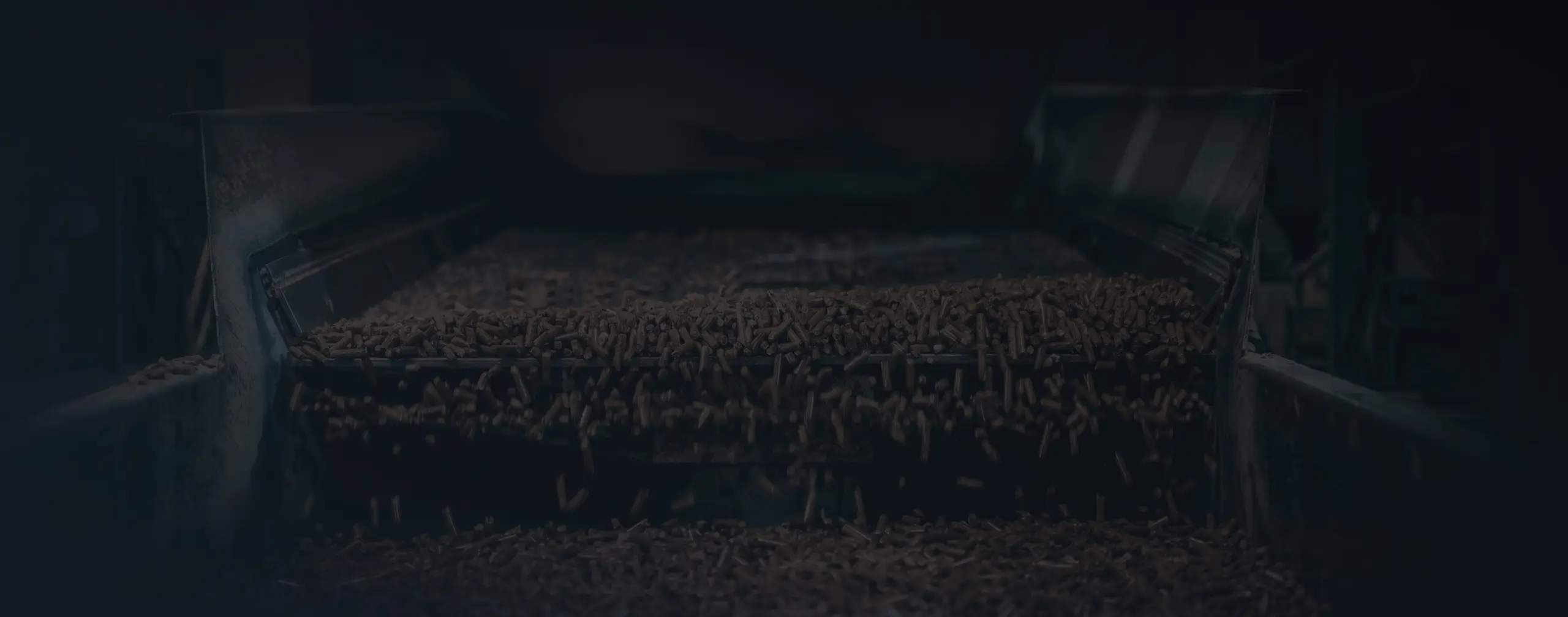
dog food extruder machine specifications
Dog food extruder machine price ranges from $4,000 to $200,000, catering to production needs of various scales. Exact pricing depends on each customer’s specific requirements. Detailed specifications and models are presented below to assist you in selecting the right equipment.
Single-screw extruder parameters
| Type | Dry Extruder | Wet Extruder | |||
| Modell | DGP-90B | DGP-120B | DGP-160B | DSP-90B | DSP-135B |
| Hauptmotorleistung (kW) | 37 | 55 | 90 | 37 | 75 |
| Leistung des Speisegeräts (kW) | 0.75 | 2.02 | 3 | 7.5 | 7.5 |
| Leistung des Kondensators (kW) | — | — | — | 1.1 | 2.2 |
| Cutter Power (kW) | 0.55 | 1.1 | 1.5 | 1.1 | 1.5 |
| Schraubendurchmesser (mm) | 90 | 120 | 160 | 90 | 135 |
| Dimensions (mm) | 2100 × 1450 × 1350 | 2400 × 1950 × 1600 | 3100 × 2650 × 1800 | 2600 × 1600 × 1900 | 3750 × 1980 × 1950 |
| Kapazität (T/H) | 0.2–0.4 | 0.5–0.6 | 0.8–1.0 | 0.5–0.6 | 0.8–1.0 |
Twin-screw extruder parameters
| Modell | SPHS75×2 | SPHS120×2 | SPHS150×2 | SPHS185×2 | SPHS185×2 |
| Hauptmotorleistung (kW) | 55 | 90 | 110 | 200 | 355 |
| Schraubendurchmesser (mm) | 75 | 120 | 120 | 150 | 185 |
| Leistung des Speisegeräts (kW) | 1.5 | 1.5 | 1.5 | 1.5 | 2.2 |
| Leistung des Kondensators (kW) | 7.5 | 11 | 11 | 11 | 11 |
| Conditioner-Modell | DC400-244 | DC500-244 | DC500-244 | DC600-300 | DC600-300 |
| Differential-Konditioniererleistung (kW) | 11 | 11 | 11 | 15 | 15 |
| Modell eines Differential-Conditioners | DC400×300-244 | DC500×400-300 | DC500×400-300 | DC600×500-300 | DC600×500-300 |
| Kapazität (T/H) | 0.5–1 | 1.5-2.0 | 3.0-4.0 | 5.0–6.0 | 10–12 |
Dog Food Extruder Machines Global Case Studies
Our dog food extruder machines are not merely theoretical concepts; they are already in practical use across more than 140 countries worldwide. Each solution is tailored to the client’s local raw materials, formulations, and production requirements, enabling the manufacture of dog food in various specifications suited to different life stages of pets.
For every project, we go beyond simply supplying individual machines or production lines; we provide professional installation, commissioning, and after-sales service to ensure the long-term, stable operation of every production facility.
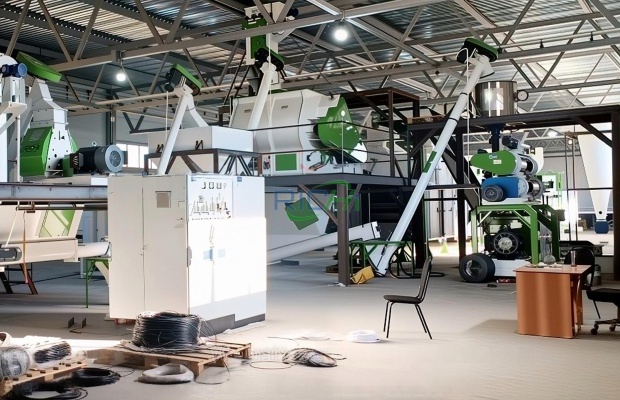
1.5–2 t/h Dog Food Extrusion System in the USA
A US-based pet food manufacturer plans to enter the dry dog food market. Initially prioritizing formula flexibility and cost control, the client is adopting a strategy of small-to-medium-scale pilot production, with plans to scale up capacity later based on market performance.
- Ingredients: Chicken meal, fish meal, fish oil, soybean meal, corn, nutritional additives, etc.
- Pellettdurchmesser: 8–12 mm round pellets
- Wichtigste Ausrüstung: The customer primarily purchased the SPHS120*2 twin-screw extruder, a precision dosing system, and a mixer, ensuring precise and flexible switching between different formulations.
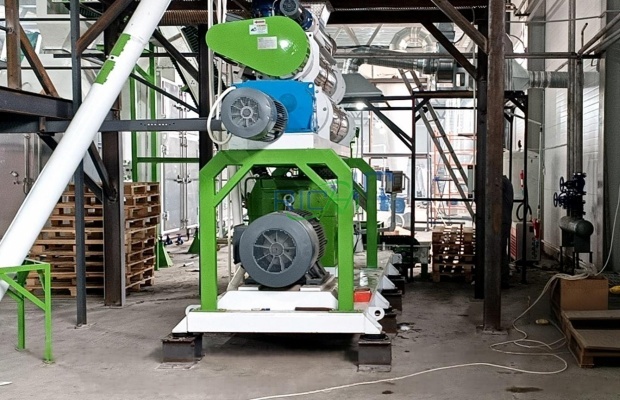
3–4 t/h High-Protein Dog Food Extruder machine Project in Canada
To meet the demands of the premium dog food market, a Canadian pet food manufacturer switched to a high-protein (38%) formula. However, processing this new formula on existing extruders frequently resulted in inconsistent product quality. Therefore, the client commissioned us to upgrade the production line .
- Rohmaterialien: Chicken, beef, turkey, cod meal, pea fiber, flaxseed, mineral and vitamin additives
- Größe der Pellets: 4-8mm, large, medium, and small round dog food
- Hauptausrüstung: Twin-screw pet extruder, multi-layer mesh belt dryer, crusher, cooler, vacuum spraying machine, automatic packaging scale.
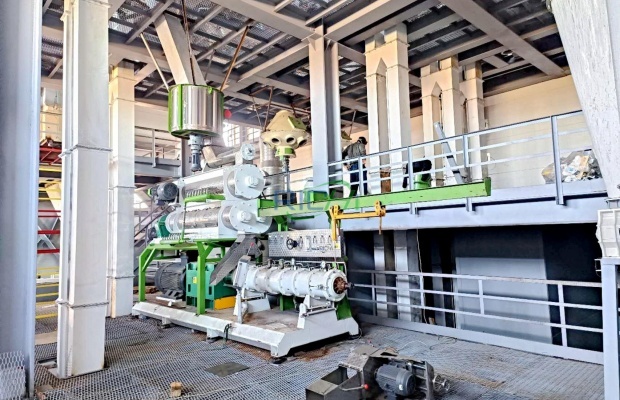
5–6 t/h Dog Food and Fish Futtermittel-Extruder-Maschine in Russia
The client requires a floating fish feed production line capable of simultaneously producing dog food, cat food, and expanded fish feed. The project prioritizes continuous, stable production capacity and a high level of automation. Key equipment includes a Schwimmende Fischfutter-Extrudermaschine and an intelligent PLC control system.
- Rohmaterialien: Oil addition is required to enhance palatability.
- Pellet sizes: 0.6–3 mm for fish feed; 4–8 mm for dog and cat food.
- Production solution: The PLC system automatically monitors line operations, requiring only 2–3 operators.
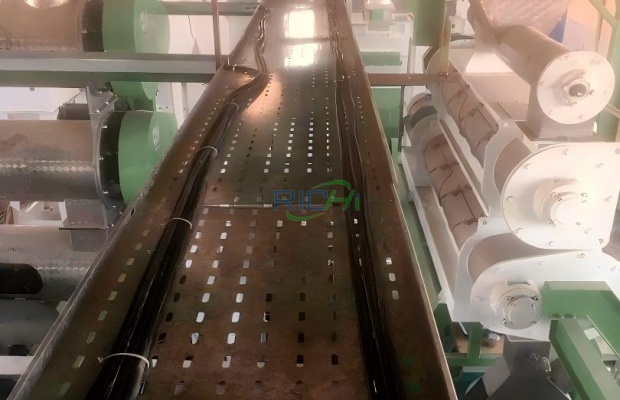
1.5–2 t/h pet Food Extruder and 5–6 t/h Shrimp Feed Pellet Mill in India
This is a combined production line featuring a dog food extruder machine and a shrimp feed pelletizer as the primary equipment. To save space and reduce investment costs, the two production systems share the majority of the equipment, with separate processing occurring only at the pelleting stage.
- Pellettdurchmesser: 1–2.5 mm for shrimp feed and 4–8 mm for dog food.
- Produktionsaufbau: Maschine zur Herstellung von Futterpellets für Garnelen (featuring a three-layer conditioner to extend material retention time, resulting in pellets that are easier to digest), twin-screw extruder, grinding and mixing system, cooler, and bagging scale.
Complete Dog Food Extrusion Process
You can choose either a standalone dog food extruder machine or a complete production line; the choice depends on your production scale, raw material formula, and investment budget. Rest assured, there is no “one-size-fits-all” solution. Backed by a professional design team and 30 years of manufacturing experience, we conduct a comprehensive assessment of your requirements and provide—free of charge—equipment configurations, process flow charts, structural diagrams, and more, ensuring the setup perfectly meets your production needs.
The complete dog food extrusion process encompasses grinding, mixing, extrusion, drying, coating, cooling, screening, and packaging. Depending on the specific circumstances, certain steps may be omitted; for instance, if your raw materials are already in a dry, powdered state, they can proceed directly to the mixing stage, thereby avoiding unnecessary investment.

Cleaning Section

Dog food has a direct impact on pets’ health. Therefore, all materials entering the production line must undergo a cleaning process to remove impurities.
01
Crushing Materials

In actual projects, powdered materials are easier to demold and produce higher output. Before granulation, a pulverizer breaks the material down into 3–5 mm particles.
02
Ingredient Proportioning and Mixing
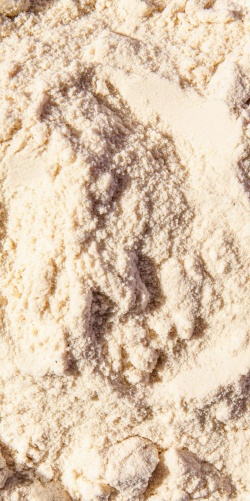
The proportioning scale accurately weighs various ingredients according to preset ratios, with a margin of error controlled within ±0.2%. Subsequently, the ingredients enter the mixer; thorough mixing ensures consistent nutritional composition across every batch of dog food.
03
Extrusion and granulation
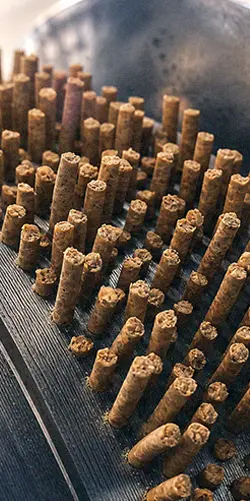
The high temperatures within the dog food extruder machine effectively eliminate pathogens in the raw materials, ensuring the production of healthy, nutritionally complete dog food.
04
Drying the Pellets

During the extrusion process, water vapor condenses on the surface of the pellets; storing them directly makes them prone to mold. Drying equipment can be used to reduce the moisture content of the pellets to 10%–13%, thereby extending their shelf life and usability.
05
Sprühen
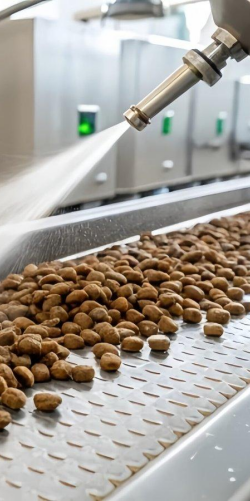
If excessive fat is added directly during the mixing stage, slippage is likely to occur during the extrusion process. For customers wishing to add fat to enhance the flavor of the dog food, we provide specialized spraying equipment that ensures the fat is evenly applied to the porous kibble.
06
Kühlung und Siebung
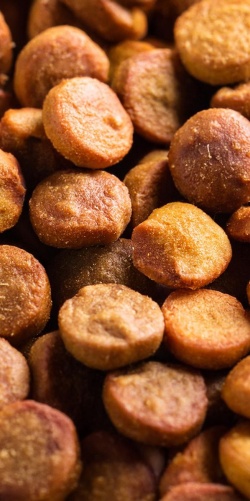
Before final packaging, a cooling unit lowers the temperature of the pellets to ambient levels, allowing them to harden. Subsequently, the intact, compliant pellets are conveyed to the packaging system.
07
Verpackung
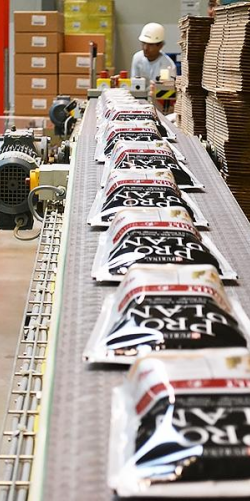
The automatic weighing and packaging machine weighs, bags, and seals the granules.
08
Auxiliary equipment in dog food production systems
For commercial dog food manufacturers, selecting a high-quality industrial dog food extruder machine is certainly important; however, achieving continuous production requires a complete production line. As a professional equipment manufacturer, RICHI offers a comprehensive range of equipment—including grinding, drying, cooling, and packaging systems—to help you launch production operations quickly.
Mühle
Mischer
Trockner
Spray painting machine
Kühler
Siebmaschine
Verpackungswaage
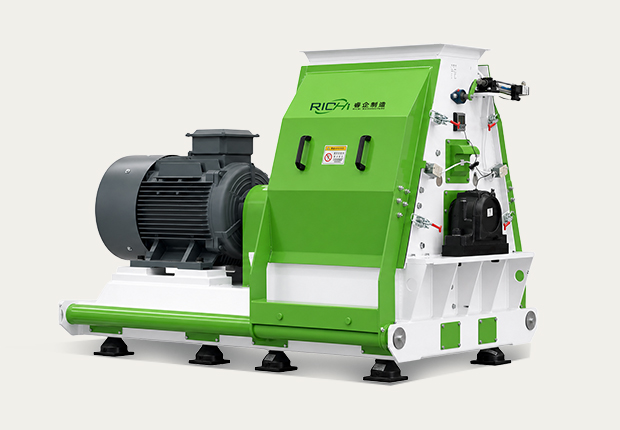
Mühle

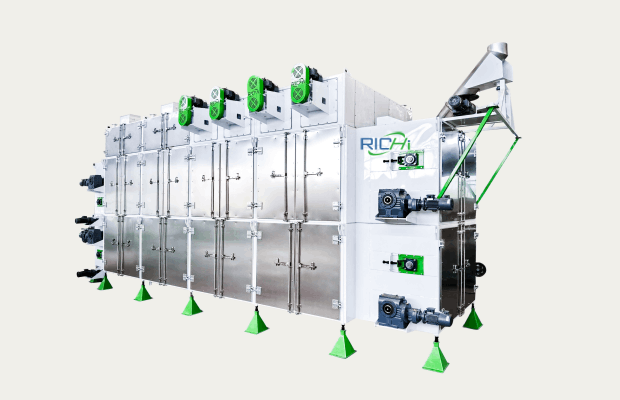
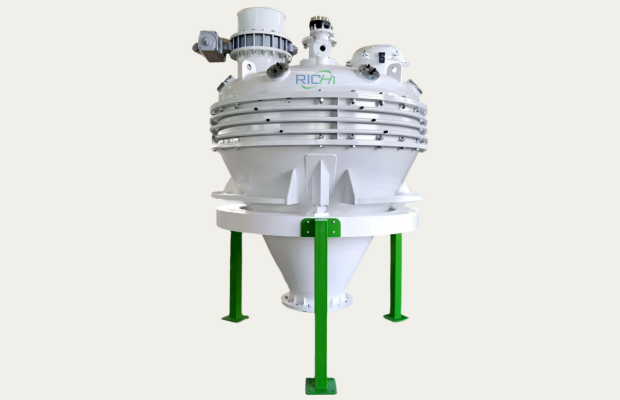
Spray painting machine

Kühler

Siebmaschine

Verpackungswaage
Warum RICHI wählen?
Durch die Wahl RICHI Maschinen, arbeiten Sie mit einem Hersteller zusammen, der auf über 30 Jahre Erfahrung in der Herstellung von Anlagen zurückblicken kann, und gewinnen einen zuverlässigen langfristigen Partner. Wir bieten erschwingliche und transparente Preise sowie einen effizienten und umfassenden Kundendienst, damit Sie Ihre Futtermittelproduktion mit Zuversicht durchführen können.
Individuelles Design
RICHI verfügt über ein eigenes Forschungs-, Entwicklungs- und Konstruktionsteam, das Ihnen maßgeschneiderte Dienstleistungen anbietet. Wir führen eine umfassende Bewertung Ihrer Anforderungen hinsichtlich Rohstoffen, Produktionskapazität und Pelletart durch, um sicherzustellen, dass alle Anlagenkonfigurationen und Produktionsprozesse Ihren tatsächlichen Bedürfnissen entsprechen.
Hochwertige Geräteproduktion
Wir verfügen über zwei moderne, intelligente Produktionsstätten und wenden ein strenges Qualitätskontrollsystem an. Jede einzelne Anlage entspricht internationalen Spitzenstandards. Das Unternehmen hat unter anderem die BV-Zertifizierung, die Zertifizierung nach dem internationalen Qualitätsmanagementsystem ISO 9001, die europäische CE-Zertifizierung sowie die Schweizer SGS-Zertifizierung erhalten.

Ausgezeichneter Kundendienst
After the dog food extruder machine arrives, our professional engineers will assist with installation and commissioning. They will also provide one-on-one operation training until your team can operate it proficiently.
More Best-Selling pelleting Equipment

Häufig gestellte Fragen
Hier finden Sie einige häufig gestellte Fragen. Sie können uns auch jederzeit kontaktieren, um Antworten zu erhalten.
Can a dog food extruder machine produce aquatic feed?
Yes, certainly. Feed extruders can produce aquatic feeds for sinking fish, floating fish, shrimp, and crabs. Just like dog food production, the process relies on shearing, mixing, and extrusion.
However, requirements regarding pellet density, diameter, and formulation differ for aquatic feed, so the equipment configuration must be adjusted accordingly. For instance, aquatic feed pellets are typically smaller, requiring the raw materials to undergo multiple stages of grinding to ensure they are easily consumed by fish and shrimp.
It is worth noting that when producing feed for sinking fish or shrimp, we generally recommend using a ring die pellet mill equipped with a double- or triple-layer conditioner. Compared to an extruder, producing sinking feed with a ring die mill results in lower electricity consumption per ton and a lower overall investment cost.
Should fat be added to high-fat dog food before or after extrusion?
For high-fat dog food, fat is typically added in stages—specifically, before and after pelleting. Liquid dosing equipment allows for the uniform incorporation of fats, water, and other liquid ingredients into the mixture at preset ratios. However, it is best to limit the fat added at this stage to 8% to prevent equipment slippage.
For formulas requiring higher fat content, additional fat can be applied via spraying equipment after the extrusion and drying processes. This method supports fat inclusion levels exceeding 16%.
What is the extrusion temperature? Will it destroy the nutrients in the ingredients?
The internal temperature of the dog food extrusion machinery generally ranges from 90°C to 130°C. As long as the extrusion temperature is appropriate, the nutrients and vitamins in the ingredients will not be destroyed. On the contrary, the right amount of high heat eliminates pathogens and promotes protein denaturation, thereby improving both the palatability and safety of the kibble.
Can I send raw materials to your factory for a trial run and to produce dog food samples first?
Yes, certainly. You can send 5–10 kg of raw materials to our factory. After the trial run, we will provide you with a video of the process, pellet samples, and a report on the corresponding processing parameters. This allows you to verify the quality of the finished product and the equipment configuration beforehand, thereby minimizing trial-and-error costs.
What is the warranty period for the Dog food extruder machine?
The equipment comes with a one-year warranty. During the warranty period, should you encounter any equipment malfunction not caused by human error, please contact our sales team directly; they will promptly provide you with a detailed solution. Additionally, you benefit from lifetime technical support, ensuring stable, long-term production.