

Shatter
Alfalfa Pellet Production Line
The RICHI alfalfa pellet production line is specifically designed to process alfalfa—in various forms—into feed or biomass pellets. It integrates cleaning, grinding, mixing, pelletizing, cooling, and packaging into a single, cohesive process. Featuring a modular design and customizable capacities ranging from 0.6 to 100 T/H, this solution offers farms and professional pellet producers of all scales an efficient, hassle-free, and cost-effective way to manufacture alfalfa pellets.

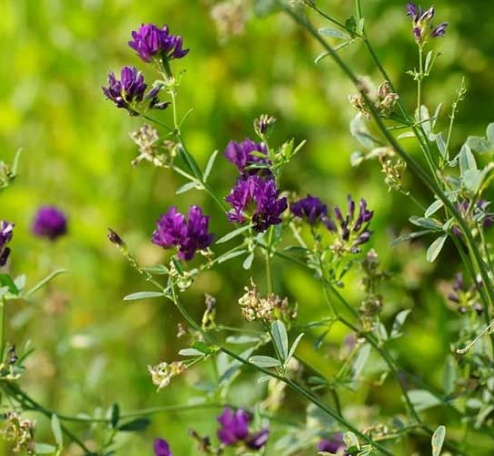
Simply prepare your alfalfa raw material, and leave the rest to us. Whether your material is in powder or bale form, dry or moist, RICHI can tailor a processing solution to its specific characteristics—ensuring you consistently produce high-quality alfalfa pellets.
Flexible alfalfa Processing
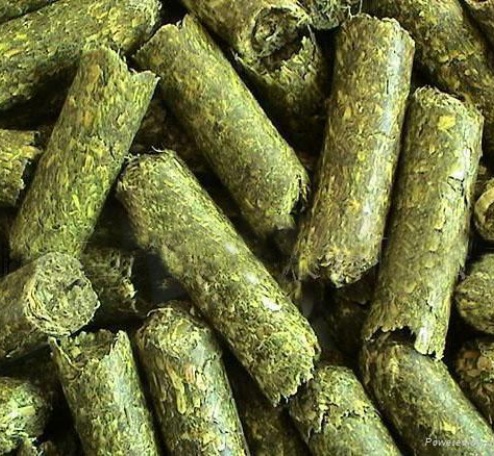
Transform bulky alfalfa into a pelletized product that is easier to store, handle, and transport. Whether you are producing livestock feed or fuel pellets, our alfalfa processing line—featuring robust, durable equipment and flexible production configurations—is designed to deliver returns that exceed your expectations.
Multiple Alfalfa Pellet Applications

Our alfalfa pellet production line is designed to handle various challenges and complex operating environments. RICHI customizes the production line configuration based on your target capacity, facility layout, and budget—helping you avoid unnecessary equipment investment and achieve your goals most cost-effectively.
Custom Alfalfa Pellet Production Line
High-Efficiency Alfalfa Pellet Production Line
How to process alfalfa efficiently and smoothly into high-quality pellets is the original intention behind our alfalfa pellet production line design. We strictly adhere to the principle of “one project, one tailored solution.” By comprehensively assessing your specific requirements and scientifically designing the production process, we ensure precise integration across every stage of operation. Helping you break through production bottlenecks and achieve stable profits in alfalfa pellet production!
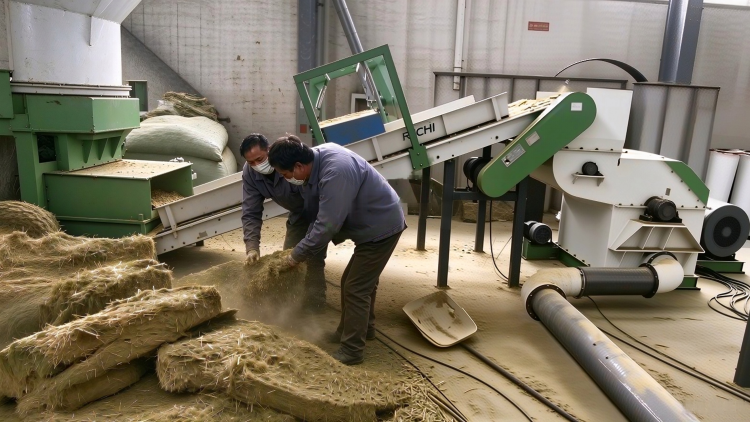

Are you worried about these issues?
- Is alfalfa difficult to pelletize?
- Inconsistent product quality?
- Production capacity bottlenecks?
- Difficult operation and maintenance?
- Lack of production flexibility?
- Frequent production line breakdowns?
- Difficulties with after-sales support?
- Unclear return on investment?
The RICHI alfalfa production line is designed specifically to address these pain points. We optimize every production process and adopt integrated system solutions to bring you better finished product quality and a smoother production experience.

Stable & Reliable Operation
All equipment undergoes international quality inspections and operational testing, ensuring that the entire production line consistently maintains performance levels well above the original factory specifications.
Automation & Good Management
Integrated control options help operators monitor critical production stages and streamline daily production management, ensuring a worry-free and highly efficient alfalfa pelletizing process.
High-Efficiency Production
An integrated production process and well-matched equipment will help you break through production bottlenecks and maintain consistently high-efficiency production year after year.
Flexible production
Modular design allows for flexible configuration across various production applications, while also enabling you to easily scale up capacity or upgrade systems in response to market demand—ultimately creating greater market opportunities for you.
Different Alfalfa Processing Solutions
When designing an alfalfa pellet production line, it is essential to consider the state of the raw material—including its size, moisture content, impurities, and physical form. These factors dictate the appropriate pre-treatment methods. We offer raw material analysis to help you develop a more precise production plan.
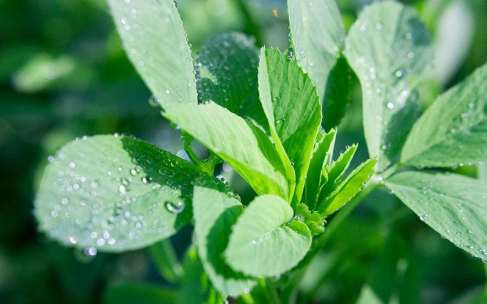
High-Moisture Alfalfa
Fresh alfalfa typically has a moisture content exceeding 60%. Consequently, a drying step is usually required in the production process to reduce the moisture content to below 15%, thereby ensuring smoother and more efficient pelletizing.
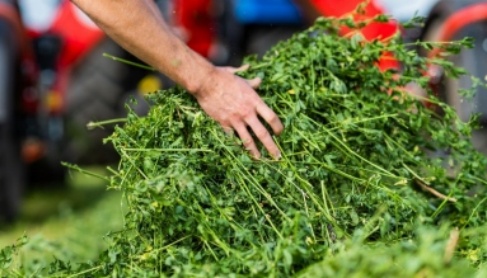
Long-Stem & Baled Alfalfa
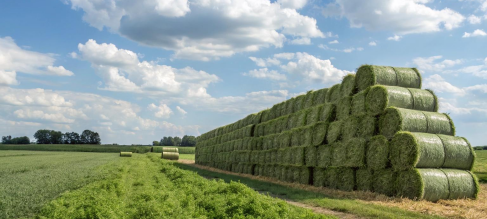
Alfalfa raw material is often handled in the form of bales or in bulk. Processing this material typically requires first chopping the alfalfa, followed by grinding it into a 2–3 mm powder. In the case of baled alfalfa, a specialized bale-breaking machine is also required to open the bales.
What are your raw materials?
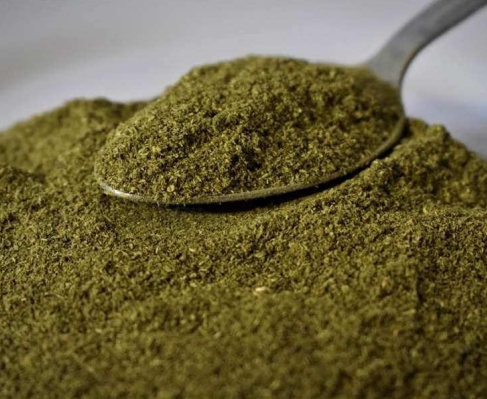
Alfalfa Meal and Impurities
This represents an ideal state for the raw material, requiring no additional drying or grinding steps. The primary focus should be on ensuring the material is free from impurities such as dust or metal, which can be managed through the use of specialized cleaning equipment.
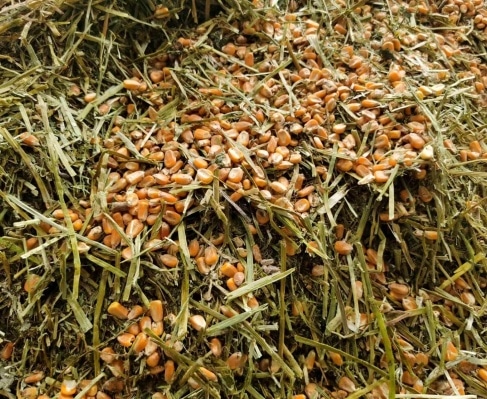
Mixed alfalfa raw material
If you are producing animal feed by blending alfalfa with grains and vitamins, we can equip you with precision weighing scales and mixers to ensure consistent nutritional content in every batch. Generally speaking, a higher alfalfa content leads to a lower production output; therefore, it is necessary to strike a balance between the formulation and the production volume.

Global Alfalfa Pelletizing Cases
Our alfalfa pellet production lines operate in over 140 countries worldwide. With extensive project experience, we have successfully addressed a wide range of production challenges—from facilities with limited height or space and difficult-to-process alfalfa raw materials to power-supply constraints, diverse application requirements, and tight budget limitations. We do not rely on “one-size-fits-all” solutions; instead, every project begins with a thorough assessment of the client’s specific needs, followed by the careful design and optimization of equipment, processes, and plant layout. Our goal is to resolve our clients’ production pain points, enabling them to launch their pelletizing operations smoothly and efficiently.
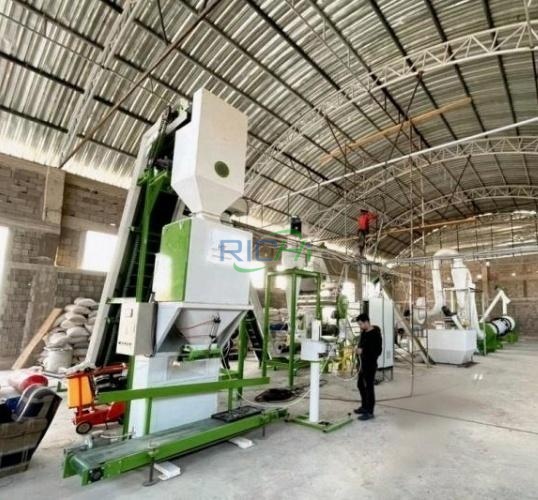

Uzbekistan
1–2 t/h Alfalfa pellet Production Line in Uzbekistan
The video shows a small-scale cattle feed production line. The client intends to produce beef cattle pellets by blending alfalfa and grains, which will then be sold to nearby farms. The production line features a horizontal, compact layout, striking an optimal balance between cost and production capacity.
- Application: New cattle feed mill
- Raw Materials: 60% alfalfa, corn, soybean meal, and premix
- Pellet Diameter: 6mm cylindrical pellets
- Key Equipment: Forage grinder, dryer, mixer, grass pellet mill, cooler, and packaging machine
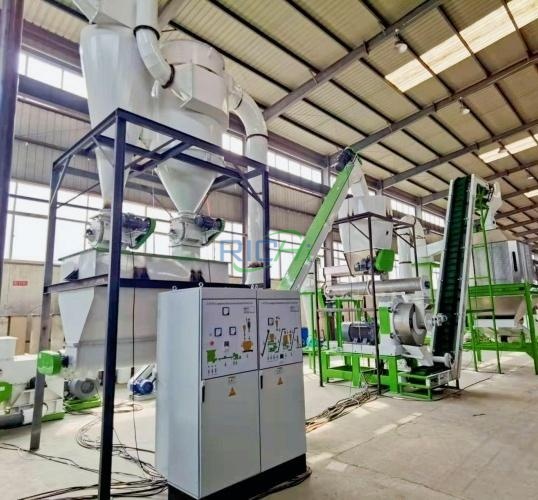

Argentina
3–4 t/h Alfalfa hay Pellet Production line in Argentina
This client operates a livestock feed mill. To ensure cleanliness and safety in the workshop, we physically separate the crushing section from subsequent sections to reduce cross-contamination from noise and dust.
- Pellet Diameter: 6–8 mm (for cattle and sheep)
- Raw Materials: 60% dried alfalfa, sunflower meal, corn, and premix
- Key Equipment: 5 T/H forage grinder, buffer silo, automatic batching scale, ribbon mixer, alfalfa pellet mill, cooling and screening unit, and pulse-jet dust collector
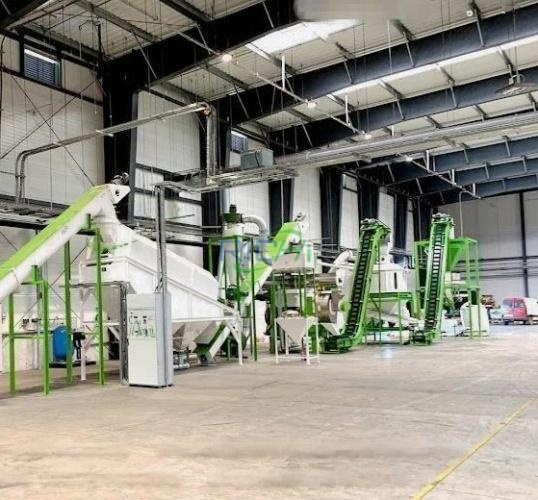

Sudan
1–5 t/h Alfalfa Feed Pellet Production Line in Sudan
This video demonstrates a trial run of a pelletizing process for complex feed formulations. The client, an integrated feed mill, required a single production line capable of manufacturing various types of poultry and livestock feed pellets. The entire line is managed via a centralized control cabinet, enabling seamless, one-touch switching between different production modes and minimizing downtime.
- Raw Materials: Alfalfa (0–80%), sorghum, cottonseed meal, and premix.
- Pellets: 2–4 mm poultry feed pellets; 4–8 mm cattle and sheep feed pellets.
- Equipment: Hammer mill, alfalfa crusher, mixer, straw pellet machine (with forced feeder), cooler, and automatic bagging scale.
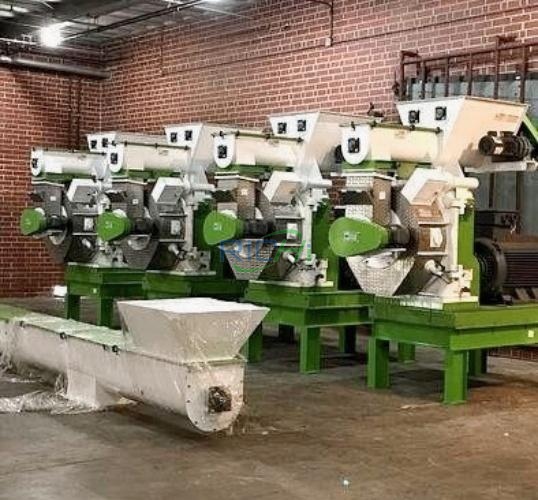

America
10 T/h Alfalfa Biomass Pellet Production in the United States
As a large biomass energy enterprise, the customer requires an efficient production system. The PLC system controls the alfalfa pellet production line. Four biomass pellet machines operate in parallel, ensuring flexible operation and continuous production.
- Pellet Diameter: 6mm
- Raw Materials: Alfalfa, wood shavings/sawdust
- Production Setup: 2× hammer mills, 2× dryers, 4× pellet mills, cooler, screener, automatic bagging/weighing system, and an intelligent PLC control system
See what customers have to say
★★★★★
We are very satisfied with the alfalfa feed pellet processing system designed by RICHI! It runs very smoothly. What truly impresses us is the equipment’s ability to operate stably 24 hours a day—this is exactly what we need.

5T/H Alfalfa Feed Pellet Production in Australia
★★★★★
Our old equipment could no longer meet production needs, so we chose RICHI after comparing several options. They checked our existing equipment and power supply and designed a solution for us. Now, production runs more smoothly and efficiently!

6T/H Alfalfa Expansion Project in South Africa
★★★★★
We wanted to start a cattle feed mill using fresh alfalfa. RICHI provided a solution that met our needs! The line runs smoothly without clogging, and we’re happy with the pellet quality and support. We’ve already received many orders.

2T/H Alfalfa Cattle Feed in New Zealand
★★★★★
We had long wanted to produce both alfalfa pellets and alfalfa meal. RICHI helped us set up a switchable, multi-stream production line to make both products. The total cost stayed within our budget, and production runs smoothly.

15 T/H Alfalfa Pellet & Meal Production in Spain
★★★★★
We’re very happy with our cooperation with RICHI, especially how quickly the production line was set up. They tested the equipment at the factory and provided clear installation guidance. We were able to start production in just 30 days, which was a big plus for us.

3T/H Alfalfa Pellet Production Line in Canada
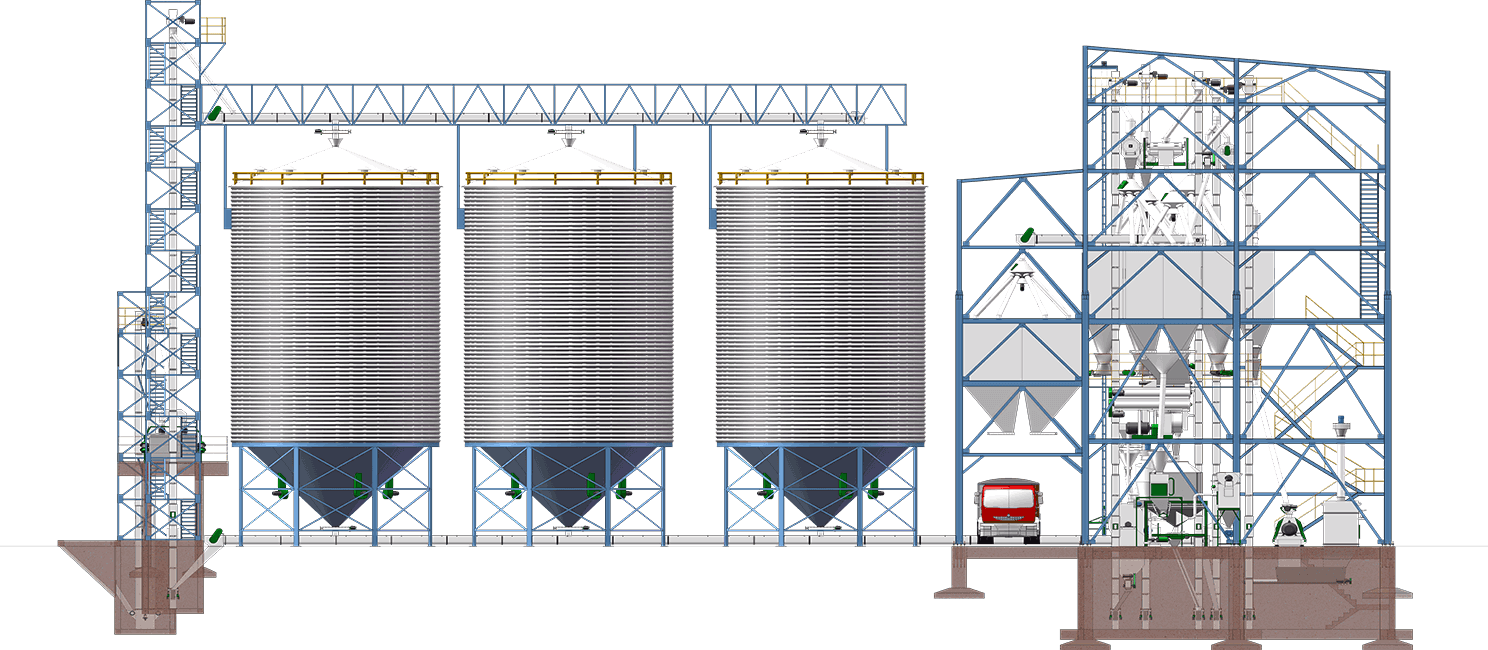
Complete Alfalfa Pellet Production Line
The production processes for alfalfa feed pellets and biomass pellets differ significantly.
An alfalfa feed production line prioritizes mixing and precise ingredient proportioning. In contrast, biomass pellet production does not involve complex formulations; instead, the focus shifts to managing the moisture content and particle size of the raw alfalfa. Such lines typically incorporate drying equipment and multi-stage grinding systems.
Regardless of your specific objectives for an alfalfa pellet production line, you can rest assured—we possess extensive experience in navigating various technical challenges to deliver production outcomes that exceed your expectations.
Cleaning
Grinding
Mixing
pelletizing
Cooling
Screening
Packing
Biomass Pellet Production Line
Cleaning
Coarse crushing
Secondary crushing
Drying
Pelletizing
Cooling
Screening
Packing
High-quality Alfalfa pellet making machine
As a professional manufacturer of alfalfa pelletizing equipment, Richi Manufacture (睿企制造) provides a complete range of high-quality machinery for alfalfa pellet production. From chopping and crushing to drying, pelleting, cooling, and packaging, each machine is selected and configured according to your raw materials and production requirements. We pay close attention to equipment quality, capacity matching, and smooth connections between processing stages, ensuring that every component works efficiently as part of an alfalfa pellet production line.
Cleaning machine
Bale breaker
Alfalfa crusher
Animal Feed Mixer
Drum dryer machine
Alfalfa Biomass Pelletizer
Alfalfa Feed Pellet Machine
Pellet Cooling Machine
Vibrate Screening
Automatic Packaging Scale
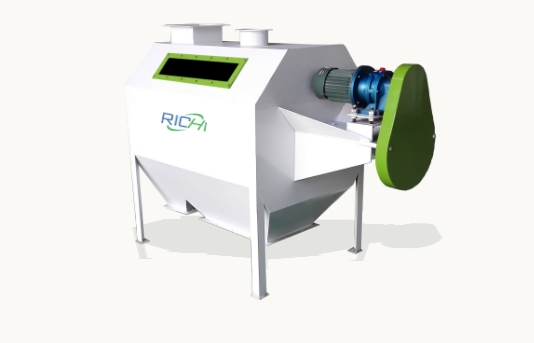
Cleaning machine
We offer a range of professional cleaning equipment designed to remove various impurities from alfalfa, ensuring a safe and clean process for subsequent production stages.
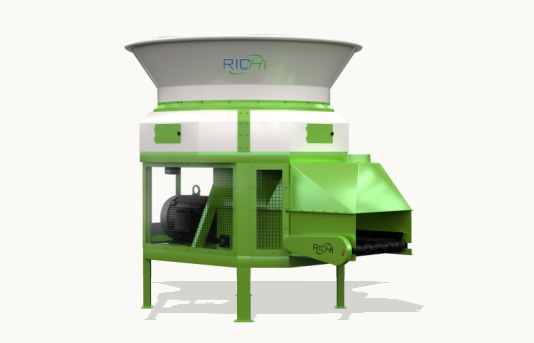
Bale breaker
This piece of equipment is specifically designed to shred large chunks of grass into loose, short fibers measuring 20–30 mm, preventing the material from tangling and causing clogs.
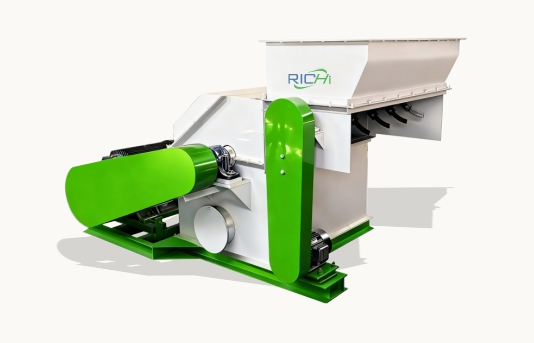
Alfalfa crusher
It can pulverize alfalfa into 0.5- 20 mm powder and is specially designed for lightweight materials such as forage and straw.
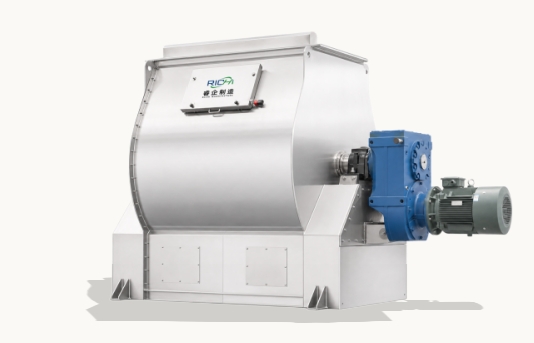
Animal Feed Mixer machine
We offer ribbon mixers, paddle mixers, molasses mixers, and drum mixers, capable of uniformly blending various powders and additives.
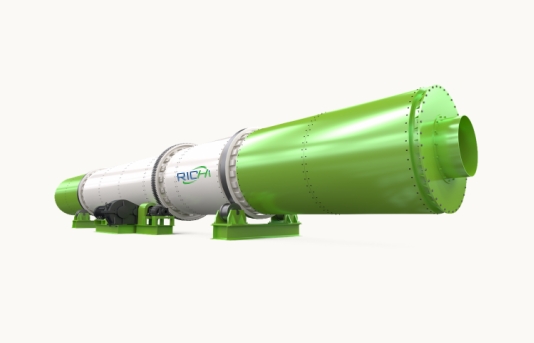
Rotary dryer machine
The internal lifting flights of the rotary dryer ensure thorough mixing of the material with the hot air, resulting in excellent drying performance with minimal residue.
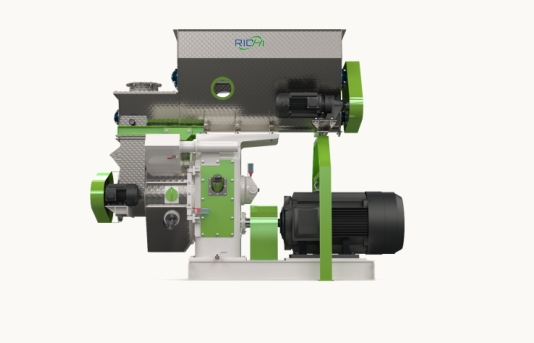
Alfalfa Biomass Pelletizer
The alfalfa pellet machine for sale is specifically designed for biomass raw materials such as alfalfa; it features highly wear-resistant materials and an enlarged pelletizing chamber, enabling the production of dense, long-burning pellets.
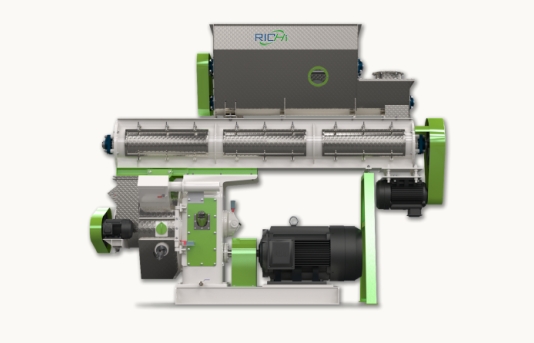
Alfalfa Feed Pellet Machine
This alfalfa pellet mill is suitable for producing alfalfa pellets and animal feed. It is equipped with a steam conditioning system that softens the forage, making it easier to form into pellets.
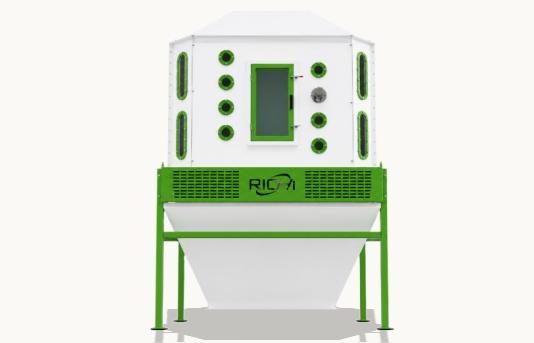
Pellet Cooling Machine
Freshly produced pellets are hot and soft. Therefore, alfalfa pellet production lines are typically equipped with a cooler to lower the temperature of the pellets and remove moisture, thereby preventing mold growth.
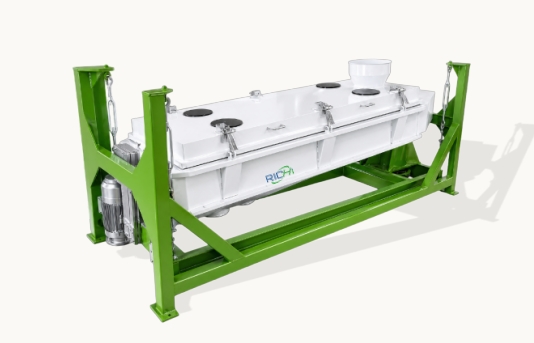
Vibrate Screening
If you require higher product quality, you can use a screening machine to separate fine powder from the granules. These substandard materials are not wasted, but are reintroduced into the production line for secondary granulation.
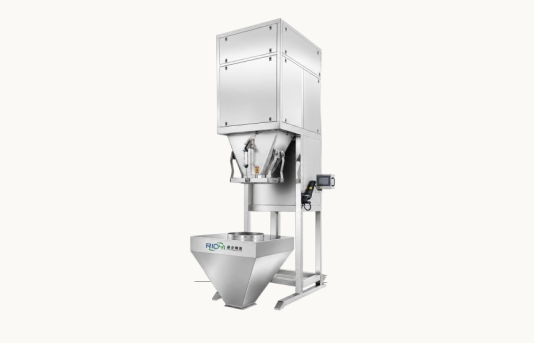
Automatic Packaging Scale
For the final step, you can choose to pack the products manually or use an automatic packaging machine to bag and seal them.
Who Can Benefit from an Alfalfa Pellet Production Line?
Alfalfa is a renewable resource rich in protein and fiber, widely used in animal feed and biomass fuel production. Our customized pellet production lines process alfalfa into compact, uniform pellets, serving livestock farms, feed manufacturers, alfalfa processors, and biomass fuel producers. Reducing storage and handling challenges while creating more market opportunities for your business.

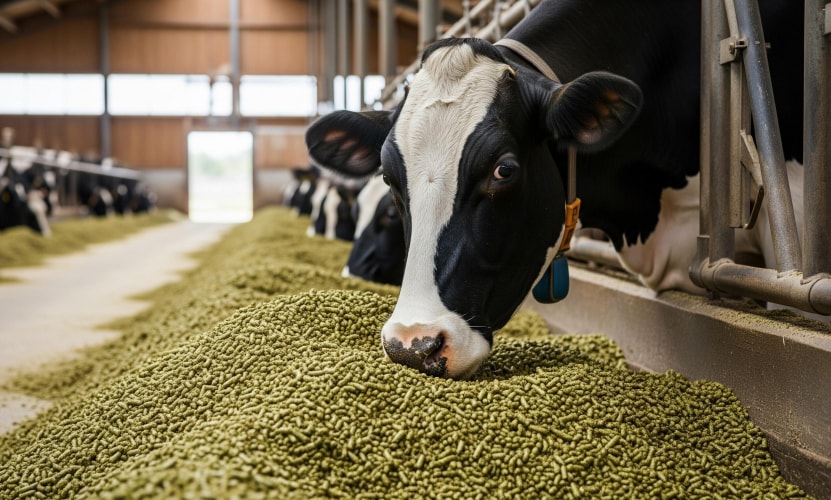
Livestock Farms
We provide compact, cost-effective alfalfa pellet production solutions for farms and livestock cooperatives. Produce nutritious, palatable 2-12mm blended feeds for different livestock year-round, reducing dependence on seasonal fresh alfalfa supplies.
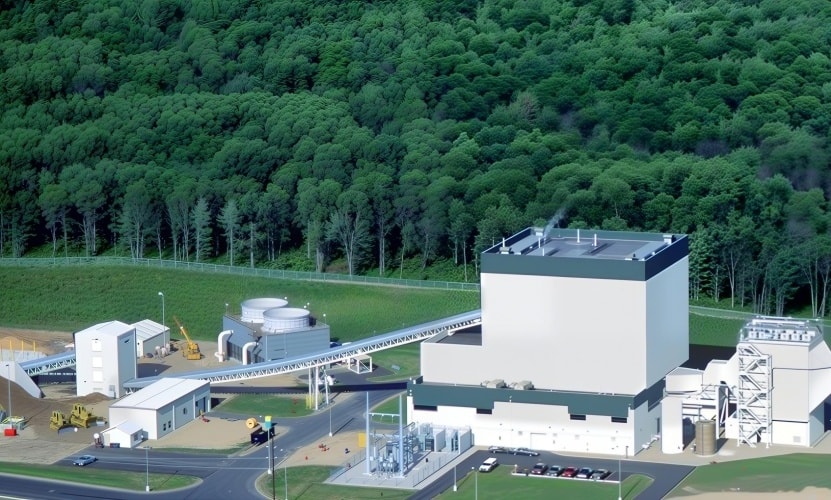
Animal Feed Plant
We provide customized alfalfa pellet production plants for commercial feed manufacturers, supporting cattle, sheep, goat, and rabbit feed production with multiple formulas and consistent pellet quality.
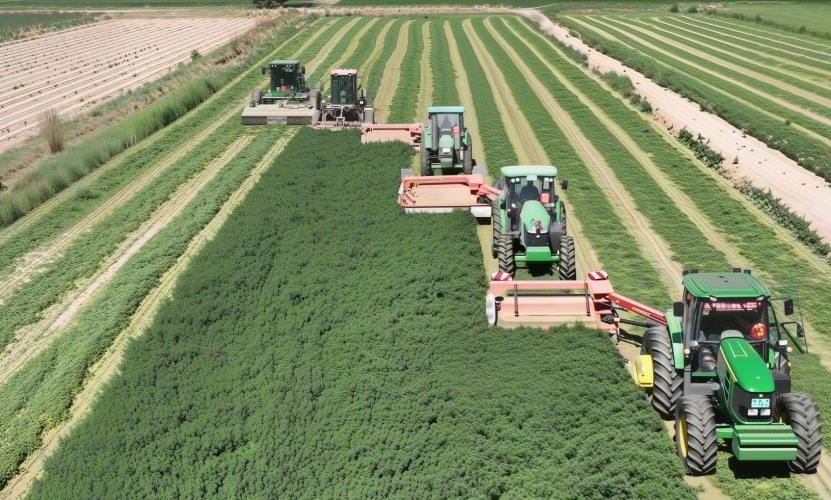
alfalfa pellet plant
The alfalfa pellet production line processes bulk alfalfa into standardized pellets, making it easier to package, handle, and transport, thereby creating more options for commercial sale.
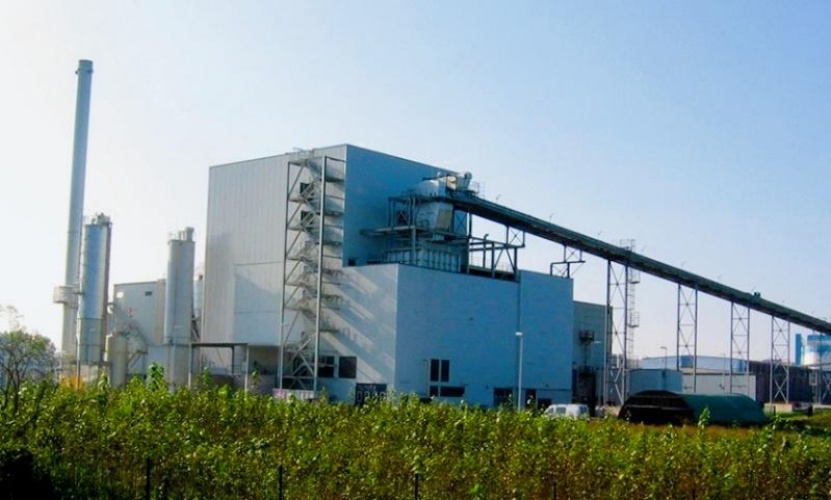
Biomass Fuel Producers
Alfalfa’s lignin helps bind pellets under heat and pressure. When blended with wood chips or straw, it can be processed into biomass fuel pellets for industrial boilers and heating systems.
Customized Alfalfa Production Solutions
Here, you can see alfalfa pellet production lines that we have customized for various clients. No matter how complex the alfalfa condition or how limited the factory conditions, we can arrange precise process customization to help you maximize production efficiency and gain market competitiveness with excellent alfalfa pellets.
1.5-2T/H High Moisture alfalfa Pelletizing Solution
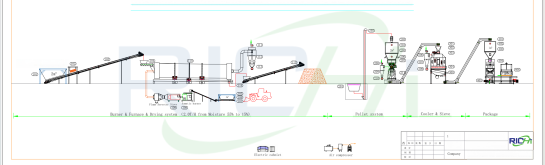
1.5-2T/H High Moisture alfalfa Pelletizing Solution
This line features separate feeding routes for wet straw and straw powder: wet straw is magnetically separated and crushed, while powder enters a 2 m³ silo before drying. Both can be processed separately or mixed. A 40 m³ dry powder silo buffers material between drying and pelletizing, reducing dryer start-ups and energy consumption.

10-11T/H Fully Automated Alfalfa Pellet Production Solution
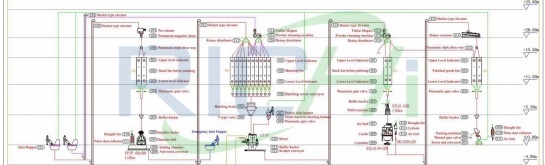
10-11T/H Fully Automated Alfalfa Pellet Production Solution
The entire alfalfa pellet processing line utilizes a fully automated feed manufacturing solution. The process—from raw material intake and storage, grinding, and batching to pelletizing and automated packaging—is fully integrated. It is well-suited for the production of various feed formulations.
The system features a vertical, tower-style layout. Materials move via gravity, ensuring a smoother flow and lower energy consumption.
6–7 t/h Alfalfa Biomass Pellet Production Solution
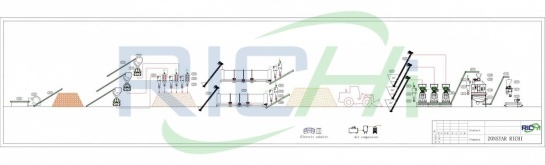
6–7 t/h Alfalfa Biomass Pellet Production Solution
This biomass production line uses a 70% alfalfa, 30% wood chips blend to manufacture fuel pellets. To ensure continuous production, the system employs multiple units operating in parallel—specifically, three sawdust crushers, two dryers, and three alfalfa pellet machines. This configuration allows flexible adjustments to production schedules and minimizes losses from potential downtime.
Retrofit Plan for a 1–2 t/h Alfalfa Pelletizing Line
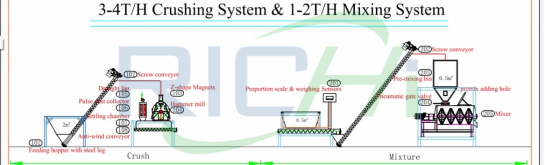
Retrofit Plan for a 1–2 t/h Alfalfa Pellet Production Line
This system combines a crushing unit with a capacity of 3–4 t/h and a batching/mixing unit with a capacity of 1–2 t/h, designed to enhance pretreatment capabilities and batching precision. We can integrate it into the customer’s existing pellet production line without replacing the entire system, thus helping to reduce upgrade costs.
| Production Capacity | Alfalfa Pellet Production Line Price | Solution Features |
| 0.6–2 t/h | $32,000 – $65,000 | Simple configuration, small footprint, and low investment cost. Suitable for small farms and cooperatives. |
| 3–4 t/h | $70,000 – $115,000 | Ideal for commercial alfalfa pellet plants, balancing production capacity and cost-effectiveness. |
| 5–7 t/h | $120,000 – $180,000 | Commercial-standard production line with high capacity flexibility. |
| 8–10 t/h | $190,000 – $260,000 | Typically, an electrical control cabinet and a dust removal system are incorporated to reduce manual labor requirements. |
| 12–20 t/h | $280,000 – $480,000 | For this scope, a configuration involving multiple units connected in parallel is typically adopted to ensure continuous production. |
| 25–40 t/h | $550,000 – $1,200,000 | Large-scale, integrated alfalfa deep-processing production lines, characterized by a high degree of automation and efficient, continuous production. |
| 50–60 t/h | $1,300,000 – $1,800,000 | Multi-unit clustered production line, equipped with a central control system; capable of meeting volume product supply requirements. |
| 60–80 t/h | $1,900,000 – $2,400,000 | Typically used for export-oriented alfalfa pelletizing projects, featuring multiple silos to ensure uninterrupted production. |
| 80–100 t/h | $2,500,000 – $3,000,000 | The entire system integrates PLC central control and automated warehousing, targeting large-volume exports globally, and has the highest investment threshold. |
Alfalfa pellet production line price
The alfalfa pellet production line cost ranges from $600,000 to $3 million. The exact price will vary based on production capacity, the level of automation, raw material characteristics, and the specific production configuration. Please share your requirements with us to receive a detailed proposal and pricing.
Our Services
From solution design to long-term after-sales support, we are always there for you.
Consulting and Solutions
Our designers will develop process flowcharts, equipment configurations, and civil engineering plans based on your specific requirements.
Production and Testing
Our 60,000+ m² modern facility uses precision manufacturing and rigorous testing to ensure every machine meets the highest standards before delivery.
Packaging and Shipping
A global transport network and rigorous packaging standards ensure that your alfalfa pellet production line reaches your factory safely and on time.
Installation and Training
A professional engineering team provides on-site support, including installation, commissioning, and professional production training, to help you maximize equipment performance.
Long-term after-sales support
We provide 24/7 after-sales support. Whether you are dealing with equipment malfunctions, need replacement parts, or have any other requirements, our after-sales experts are fully dedicated to assisting you.
Frequently Asked Questions
Various issues may arise during the procurement and operation of equipment for an animal feed production line. Below are several of the most common problems, which we hope will be helpful to you:

Can an alfalfa pellet production line process 100% pure alfalfa?
Certainly. However, pure alfalfa has high fiber content and poor flowability. Compared to blended formulations, it is more difficult to process into pellets, and production capacity may decrease by 15%–25%.
During the pelletizing process, be sure to monitor and control the moisture content and particle size of the alfalfa. Doing so will help ensure a more efficient pelletizing operation.
Is it possible to produce both alfalfa pellets and alfalfa meal?
No problem. In fact, we have handled similar projects in Canada. Typically, a diverter valve is installed after the grinding stage, allowing powdered material to be routed directly to the packaging system, while granular material proceeds to the granulation, cooling, and packaging stages. This approach allows for the shared use of pre-processing equipment, thereby reducing investment costs.
If I want to add molasses to my alfalfa feed formula, when should I typically add it?
We offer specialized high-speed molasses mixers, typically installed upstream of the pellet mill. Designed for continuous mixing, these units provide a throughput of 15–30 t/h and effectively address the challenges posed by the high viscosity of molasses, which often makes thorough mixing difficult.
As a general rule, it is recommended that the inclusion rate of molasses does not exceed 5%. Exceeding this limit can cause the material to become sticky and lead to significant residue buildup, thereby increasing the frequency of required daily cleaning.
How to Set Up an Alfalfa Pellet Production Line
Establishing an alfalfa pellet production line requires defining your raw materials, target output, and budget. You should select an appropriate level of automation and a reliable equipment manufacturer, while leveraging expert guidance to plan the facility layout, production process, and subsequent installation and commissioning. By conducting thorough comparisons and on-site visits, you can identify a production solution best suited to your specific needs—ultimately lowering investment risks, minimizing unnecessary costs, and ensuring stable, efficient production.
How long does it take to install an alfalfa production line?
Our production lines feature a modular, pre-assembled design. By handling pre-assembly and pre-commissioning within the factory, we minimize the need for on-site welding and fitting. Installation can be completed in 7–90 days, enabling you to launch production quickly. (More footage from the scene: YouTube)

